
Watch a busy salon on a Saturday and the work does not look like the photos. Before a single bow goes in an ear, a groomer has bathed, blasted dry, and brushed out a matted spaniel that did not want any of it, read the dog's mood from the way it held its shoulders, and saved its skin from a clipper that runs hot. The styling is the last ten percent. The other ninety is patience, stamina, and a hundred small decisions about a wet, frightened animal.
That gap between the picture and the work is why so much advice about becoming a groomer is useless. Search the phrase and you get two camps. One is the grooming academy that wants several thousand dollars and tells you its certificate is the path. The other is the forum thread that shrugs and says school is a waste, just get a job. Both are missing the structure that actually turns a dog lover into a groomer a salon will hire.
I am not a groomer. I ran a small walking and sitting operation in Brooklyn for six years, added boarding, and eventually brought in a groomer named Marisol to handle the dogs already staying with us. Watching her train the bather we hired, and watching that bather become a finisher over about eighteen months, taught me what the academies leave out and the forums get wrong. This is the path I watched work, named so you can follow it.
01 / The real jobThe job behind the bows.
Grooming is a trade, in the old sense: a physical skill you build on real bodies over time, not a qualification you collect. The day is spent on your feet, lifting dogs onto tables, holding awkward positions while a clipper traces a clean line, and managing animals that range from sleepy to genuinely dangerous. A groomer needs strong hands, a steady temperament, and the ability to read a dog's body language fast enough to stop trouble before it starts.
It is also a health job before it is a beauty job. A good groomer spots ear infections, hot spots, lumps, cracked pads, and overgrown nails that a vet has not seen yet, and knows when to stop and refer rather than push on. The styling sits on top of all that. Owners care about the haircut; the dog cares about whether the hour was calm or frightening, and the difference is the groomer's whole craft.
The skills behind the scissors
Formal education is optional in grooming, which throws the weight onto skills you build by doing. The technical skills are the visible ones: bathing and drying, brushing out different coat types, clipper and scissor techniques, breed patterns, and safe nail trimming. The people skills take longer and matter just as much, among them communication with anxious owners, the patience to slow down for a frightened puppy, time management across a full day, and the attention to detail that turns an acceptable groom into one a client books again. Underneath both sits a working knowledge of canine anatomy and animal welfare, enough to read the early signs of pain, parasites, or other health issues and know when a dog needs a vet rather than a haircut.
None of that is learned from a slideshow. It is learned in repetition, on different coats and temperaments, which is why the honest unit of progress in this trade is not weeks studied but dogs finished.
02 / The frameworkThe 400‑Dog Path.
The 400‑Dog Path is the route from no experience to a groomer who can run a full dog start to finish, measured the only way that does not lie: by the number of dogs you have actually completed. Time‑based promises are the problem with most grooming advice. Two people who both did “a twelve‑week course” can have groomed wildly different numbers of dogs, and the one who did more is the better hire every time. Dogs finished is the honest meter.
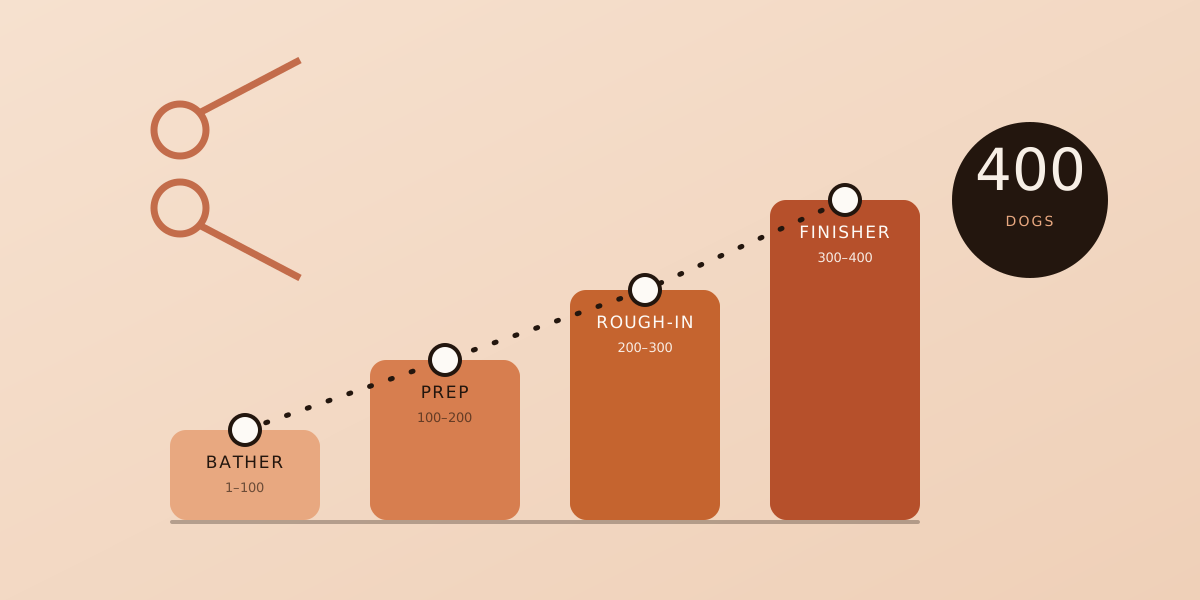
Nobody agrees on an exact figure, and you should distrust anyone who claims a hard one. But the working groomers Marisol trained and worked beside all crossed roughly the same line somewhere around four hundred finished dogs, and the path there runs through four stages in order. Skip one and it shows in the dog.
- Bather (dogs 1–100). Bathing, high‑velocity drying, brushing, nails, ears, sanitary trims. The base of every groom, and where you learn to handle and read dogs before a clipper is in your hand.
- Prep (dogs 100–200). Dematting, breed brush‑outs, prep clipping, and the dryer work that sets up a clean finish. This is where speed and confident handling come from.
- Rough‑in (dogs 200–300). The clippers come out. Full grooms roughed in with a senior groomer checking your lines, learning breed patterns and clipper control on real coats.
- Finisher (dogs 300–400). Scissor work, breed standards, and the hard dogs, run solo. Cross this stage and a salon will hire you as a full groomer.
Notice that paying for a course is not stage one, and that finishing dogs solo is stage four, not week one. Each stage earns the next. A bather who has dried two hundred dogs handles a clipper better than a classroom graduate whose training ran to twenty, because the hands already know the animal. Here is how to actually move through the stages.
03 / The routesThree doors in.
There are three ways to start the path, and they suit different budgets and temperaments. None of them is wrong. The only real mistake is choosing by the brochure instead of by how you learn.
On the job, as a bather
The most common entry point and the cheapest: get hired as a bather at a salon, a chain like Petco or PetSmart, or a mobile unit, and learn while you earn. You wash and dry dogs all day, watch the groomers work, and absorb handling by osmosis. It is the slowest route to a full groom because nobody is obligated to teach you the clippers, but it costs nothing and it tells you within a week whether you actually like the work.
An apprenticeship
A more structured version of the same idea: a groomer agrees to train you, usually over six to ten weeks of focused time, often for low or no pay during the learning stretch. The quality is entirely down to your mentor. A good one fast‑forwards you through the stages on real, difficult dogs; a careless one leaves you bathing for a year with no path to the table. Ask exactly how many dogs you will groom, and how soon, before you commit.
Grooming school
The classroom route. A dog grooming program puts you in front of instructors and a set curriculum, and most ask for little more than a high school diploma to enrol. Online programs mostly run $1,000 to $4,500 and often bundle a starter kit of shears, clippers, a dryer, and grooming products into the tuition; in‑person schools run higher, from roughly $5,000 to $10,000 and occasionally up to $17,000 for the longest, most hands‑on options. School gives students structure, breadth across breeds, and a certificate, but the dogs in a classroom are calmer than the ones in a real salon, so most graduates still need a stretch of volume work before they are genuinely fast.
Marisol's strongest hires almost always combined two doors: a short course or some online study for the fundamentals, then a bather job that ran them up the volume fast. The course buys you the vocabulary; the floor buys you the speed. Neither alone gets you to four hundred dogs as cleanly as both together.
04 / The kitThe kit you'll actually buy.
Whatever route you take, the tools eventually come out of your own pocket, and the spread is wide enough to matter. You do not need a full professional kit on day one. You need the right equipment for the stage you are at, bought in the order the work demands it.
- Starter tools (under $200). A decent clipper, a couple of blades and guard combs, a slicker brush, a steel comb, and nail clippers. Enough to practice on your own dog and a few friends'. Budget clipper kits start around $20 to $80, though they wear out fast.
- A working kit ($500 to $900). Professional clippers, a full blade set, quality shears and thinning scissors, a high‑velocity dryer, and brushes for different coat types. A bundled professional kit runs about $700. This is the gear that makes you employable and fast.
- A salon or van ($5,000 to $15,000+). A grooming table, a bathing tub, a stand dryer, clippers, and the products to stock a shop. A mobile setup adds a van conversion of $15,000 to $45,000 on top, which is why owners, not employees, carry that cost.
The tools also wear. Blades dull, dryers burn out, and shears need sharpening every few months, so a working groomer treats equipment as a running cost rather than a one‑time buy. Most employed groomers bring their own shears and clippers even when the salon supplies the tables and tubs, because good tools are personal and you learn to protect them.
05 / CertificationThe certificate question.
Here the advice splits hardest, so let me be plain: in the US, no certification is legally required to groom dogs, and you can be excellent without one. But the credible certifications are worth earning once you have the hours behind you, because they answer the silent question every nervous owner has, which is whether you actually know what you are doing.
Three bodies carry real weight, and they prove different things.
- NDGAA. The National Dog Groomers Association of America runs the National Certified Master Groomer program, endorsed by the American Kennel Club (AKC). It is the most recognized credential in the trade, with written exams that test your knowledge and hands‑on exams across breed groups, and it expects a minimum of two years' grooming experience before you sit it. This is a mid‑career goal, not a starting point.
- IPG. International Professional Groomers offers a respected certification track with practical testing, popular as a first formal credential after a year or two on the floor.
- ISCC. The International Society of Canine Cosmetologists certifies along similar lines and is well known in the show and styling world.
The pattern across all three is the same: they certify experience you already have, not experience you skip. That is why certification sits after the path, not before it. Chasing a stack of obscure certificates before you can finish a dog impresses no one and grooms nothing.
Safety is not a module you can skip. The fastest way to end a grooming career early is to nick a dog, miss a heat‑stress signal under a dryer, or restrain an animal badly enough to hurt it.
Whatever route you take, make canine first aid, safe handling, and equipment hygiene the parts you over‑learn. Owners forgive an uneven trim. They do not forgive an injured dog.
06 / The lawWhere the law actually applies.
People worry about licensing far more than the law warrants. As of 2026, no US state licenses individual dog groomers the way it licenses, say, cosmetologists. What a small number of states regulate is the grooming facility, which matters the day you stop being an employee and open your own.
- Connecticut licenses grooming establishments and the people who work in them through its Department of Agriculture.
- New Jersey folds groomers into its animal‑care rules, requiring an approved program and a state exam with standards for sanitation, equipment safety, and handling.
- Colorado licenses grooming facilities under its Pet Animal Care and Facilities Act rather than licensing the groomer.
Several more states, among them Massachusetts, Texas, and New York, have weighed similar rules, so the map is worth checking for where you actually work rather than trusting a blanket answer. For most aspiring groomers the practical version is simple: you need nothing to start as a bather, and you need to check local business and facility rules the day you set up on your own.
07 / The numbersWhat it actually pays.
The honest headline is that grooming pays a solid working wage, not a fortune, with a real ceiling for the people who build a business rather than just a chair. The average US groomer earned about $49,000 a year in 2026, roughly $23.50 an hour, but that average hides a wide spread that maps almost exactly onto the path.
A bather starts near the bottom, often $13 to $16 an hour, because the job is entry‑level and you are still learning. Once you are finishing dogs, most groomers land between $38,000 and $55,000, frequently paid on commission per dog, with tips on top that can add up fast in the right neighborhood. Mobile groomers do better on average, around $54,000, because clients pay a premium for the van pulling up outside. And the people clearing $100,000 are almost never the fastest scissors in the room. They are the ones who own the salon or run a fleet of vans.
The lesson in those four lines is the same one the trade teaches everywhere: the money is not in being a slightly better groomer, it is in owning the thing the groomers work inside. Which is where the work stops being only about dogs.
The certificate gets you the interview. The four hundredth dog gets you the job.— Marisol, on what she looks for in a hire
If you go the owner route, the unglamorous machinery starts to matter as much as the grooming: an appointment schedule that does not double‑book the table, client and pet records, vaccination tracking, and invoicing that actually gets paid. That back office is where your brand and your real earning opportunity live, and it is exactly what falls apart in a notebook, which is the quiet reason we built PackMonty for operators adding services like grooming to a pet‑care business.
08 / The settingsWhere the work actually is.
One reason grooming is a durable career is that the same skill opens several different doors, and you can move between them as your life changes. A finisher is employable in more places than almost any other worker in the pet trade.
- Grooming salons. The classic setting, where most groomers learn the trade and many stay. Steady appointments, a built‑in client base, and colleagues to learn from.
- Big‑box chains. Petco, PetSmart, and similar pet stores run high‑volume salons and often train bathers up, which makes them a common first job.
- Mobile units. A van that comes to the customer. Higher pay, more independence, and a loyal client base, at the cost of running a vehicle.
- Veterinary clinics and boarding kennels. Steady work grooming dogs that are already on site, often at a calmer pace than a busy salon.
- Your own business. A storefront, a home studio, or a mobile round of your own. The most freedom, and the most admin.
Within any of these you can specialize. Breed‑specific styling for show clients, creative grooming, hand‑stripping for terriers, or cat grooming all command higher rates because fewer groomers can do them well. Pick a specialty that fits your market and you become the obvious answer for it, the same way a finisher who knows breed standards out‑earns one who only knows a single pet trim.
09 / Anti-patternsWhat not to do.
Four mistakes show up again and again in groomers who stall. Each one feels reasonable at the time.
- Buying the expensive school first. A $10,000 program before you have spent a single shift bathing dogs is a bet on a career you have not tried. Take a bather job or a cheap online course first, find out if you like wet dogs at eight in the morning, then invest.
- Reaching for the clippers too soon. Every new groomer wants to skip the bath and start cutting. The bath is where handling lives. Rush past it and you finish patchy dogs and frighten the nervous ones.
- Treating safety as the boring part. Speed without safe handling is how dogs get hurt and careers end. Over‑learn first aid, hygiene, and restraint before you chase a faster trim.
- Charging full price before you can finish. The unregulated market lets you advertise grooms on day one. A handful of botched early dogs and the reviews that follow cost more than the money was worth.
10 / Start hereTake this with you.
If you do one thing this week, do not enrol in anything. Walk into two or three local salons, mobile units, or pet‑store grooming departments and ask whether they need a bather. Starting the meter on real dogs is the bottleneck, and everything else, the course, the certification, the eventual business, gets easier once you are washing and drying dogs for a living.
Then count. Not weeks, dogs. Keep a quiet tally of the animals you finish, because the number is the truest map you have of how close you are to being a groomer a salon will fight to keep.
And if you already run a pet‑care operation and you are reading this to hire rather than to retrain, the path tells you what to look for: a bather who handles dogs calmly, a clear method around safety, and a finisher with a few hundred dogs behind them. Marisol had all three when I met her. She was worth every dollar.
— DR, listening to a dryer through the back wall, Brooklyn