Biscuit had a perfect weekend. Two hours of off-lead running at the Austin reservoir on Saturday, an hour of fetch on Sunday, and by Monday evening the three-year-old border collie mix had eaten the corner off a couch cushion. Her owner called Tomas, who runs four walkers, and asked what else she could possibly do with the dog.
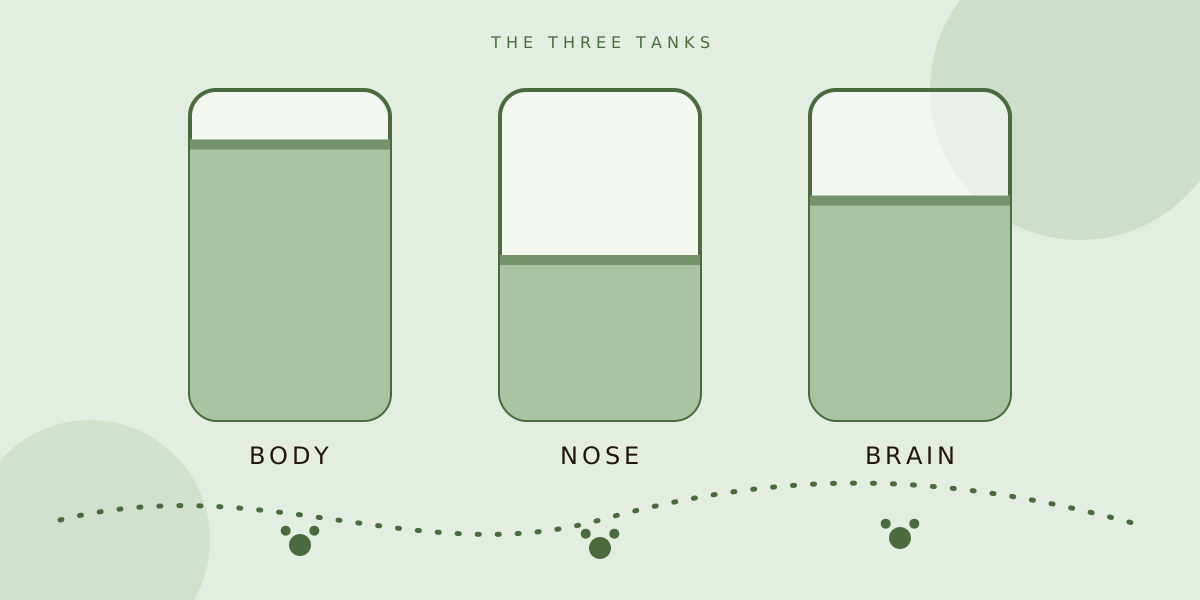
Tomas gave the answer every working walker learns eventually. Nothing was wrong with the exercise. Biscuit’s body tank was full to the brim, and her nose and brain had not been touched in days.
Search for things to do with your dog and you get a list of 16, 21 or 26 ideas, in no particular order, with no way to choose between them. This piece does the choosing. It sorts every activity by what it uses up, shows how to build a week from three types, then covers where to take a dog, the dogs who need a different list, and how to sell all of it if you walk dogs for a living.
01 / Why the lists failEvery list is long, and none of them help you pick.
The lists are good. Hiking, nose work, puzzle feeders, pack walks and even pup painting turn up on at least one of them. What none of them do is tell you which three to pick on a Wednesday.
That gap is where owners go wrong. They pick what is fun for them: a hike, a beach day, a trip to the dog park. All three are body activities. A dog that gets four of them a week is fit, fast and still climbing the walls, because two thirds of what the dog needs has not been touched.
02 / The Three TanksEvery dog runs on three tanks, and a walk only fills one.
Picture each dog carrying three tanks. The body tank is physical exercise: running, swimming, hiking, fetch. The nose tank is scent work: sniffing, tracking, searching. The brain tank is problem solving and learning: puzzles, new tricks, training sessions. A good activity drains one tank hard and the other two a little. A good week drains each tank at least twice.
A dog that is tired in the body but restless at home has an empty nose or brain tank. Add a different activity before you add more miles.
Why three? Because they empty independently. Sniffing is how a dog reads the world, and following a scent is hard mental work, so a slow ten-minute sniff often leaves a dog more settled than a fast jog does. Training works the same way. Ten minutes learning a new cue can flatten a clever dog in a way a fetch session never will.
The framework has two rules. Each day fills at least two tanks, and no tank sits empty for more than two days. The next three sections give you the menu for each one.
03 / Body tankBody tank: the activities everyone already knows.
These are the activities people picture when they imagine a day out with a dog: hiking, swimming, jogging, biking, fetch and flying disc, plus the organized sports. Agility, flyball and dock diving sit at the high-energy end. The American Kennel Club’s Barkour is the friendliest on-ramp, a small course of low obstacles that dogs of any breed, mixed breeds included, can run.
Three rules keep the body tank safe.
- Build up slowly. A dog that walks 30 minutes a day should not do a four-hour hike on Saturday. Add distance in steps over several weeks and check paws and gait the next morning.
- Respect the pavement. Vets commonly cite asphalt reaching about 125°F when the air is only 77°F. If you cannot hold the back of your hand on it for five seconds, it is too hot for paws. Move body activities to early morning, shade or water.
- Vest the swimmers. Not every dog swims, and heavy-chested breeds like bulldogs sink. Put a life vest on any dog new to water and keep the first swim shallow.
Puppies and seniors get their own rules. Ask a vet before adding jumping, sprinting or long distances to a growing puppy or an older dog with stiff joints.
04 / Nose tankNose tank: the cheapest way to tire a dog.
Scent work is the most undersold activity on every list, because it looks like nothing. The dog stands in a patch of grass for ninety seconds and you wait. That is the point. Nose work classes and the sport of tracking turn it into a hobby, and a rented private field from a service like Sniffspot lets a dog search in peace, away from crowds.
At home, a handful of kibble scattered across the lawn turns breakfast into a search that lasts ten minutes. A towel rolled around treats, a muffin tin with tennis balls over the treats and a snuffle mat do the same indoors. The cheapest and best option is the sniff walk, sometimes called a sniffari.
Walkers undersell this because a sniff walk covers far less distance, so it does not feel like work. It is, and clients who book one for a high-energy dog usually keep booking it.
05 / Brain tankBrain tank: short sessions of real thinking.
Brain activities ask the dog to solve something. Puzzle feeders, hide and seek, and learning a new trick all count, and so does any training class that teaches something new rather than repeating something old. The AKC’s Trick Dog program gives a goal to work toward, and the Canine Good Citizen test, with its ten items covering things like walking on a loose leash, greeting a stranger politely and coming when called, gives a goal that pays off in the real world.
Keep sessions to five or ten minutes and stop while the dog still wants more. A dog that is still keen at the end will be keen to start tomorrow. A dog pushed past its limit will start refusing, and you will have trained the opposite of what you meant to.
Brain work suits the dogs that are hardest to exercise: the senior with arthritic hips, the puppy that cannot yet go far, the dog recovering from surgery. If a vet has said no running, the brain tank is the one you can still fill.
06 / Outings and placesOutings fill two tanks at once.
A day trip rarely hits one tank. A hike with a long sniff stop at the top fills body and nose. A patio lunch after a trail adds a calm social hour. Camping, beach days, pet-friendly hotels, dog-friendly breweries and attraction “dog days” all combine tanks, and they are the best use of a Saturday because the dog gets more than one kind of tired.
Finding the places takes a few minutes. Directories like BringFido list dog-friendly restaurants, hotels and attractions city by city. City park departments publish their off-lead rules. Campgrounds post their vaccination and leash policies, so read them before you book rather than at the gate.
Dog parks deserve a caution. They are a good body-tank option for a social, well-trained dog that goes when the park is quiet. They are a poor default for everyone else, which the anti-patterns section comes back to. Look for separate areas for small and large dogs, working gates, and owners who are watching their dogs rather than their phones.
07 / A week with BiscuitHere is Biscuit’s week, tank by tank.
Tomas rebuilt Biscuit’s week around the two rules. Every day fills two tanks, and no tank sits empty for more than two days. He kept Saturday’s long outing, because Biscuit loves it, and moved the rest around it.
Count the tanks. Body is filled four times, nose five, brain four. By the second week the couch cushion was safe. Biscuit was not doing less. She was doing different things, and her owner stopped trying to run her tired.
08 / Different dogsSome dogs need a different list.
The Three Tanks flex for every dog, but the mix changes. Puppies get short sessions of everything, and the nose and brain tanks are the safest to fill while joints are growing. Seniors like Marlowe, a 12-year-old lab on Tomas’s route, swap miles for scent: slow sniff walks, scatter feeding and gentle puzzles. Reactive dogs do better in a rented private field or on quiet streets at off-peak hours than at a dog park. Flat-faced breeds and dogs in hot climates need body activities in the cool of the morning, in water or indoors.
Our guide to how long to walk a dog sets out the numbers for build, age, condition and weather. The Three Tanks tell you what else to put in the day once the walk is sized correctly.
09 / Selling the listIf you walk dogs for a living, turn the list into a menu.
Most clients have never heard of the three tanks, and most think a longer walk is the only lever. You can show them a better one. Tomas now gives every new client a one-page card for their dog with the three tanks and a rough read on which is emptiest. It takes two minutes to fill in at the first walk, and it changes the conversation from “can you walk her longer” to “what should we add”.
The card sets up four add-ons that sell themselves. A 20-minute sniff walk for high-energy dogs. An enrichment visit where the walker sets up a puzzle feeder and a scent game. A weekend adventure hike for dogs with a full body tank and an empty nose tank. And Canine Good Citizen practice sessions, which give the owner a goal and you a recurring booking.
Treat each add-on as its own service line. Whether you take bookings in PackMonty or a spreadsheet, a client can only say yes to something they can see on the booking form, and your walkers can only deliver something they can see on the route sheet.
10 / Anti-patternsFour ways a good list goes wrong.
- Don’t default to the dog park. It fills the body tank, and brings crowding and unscreened dogs with it. Use it when the dog is social, the park is quiet and you are paying attention.
- Don’t fetch until collapse. Repeated ball chasing builds adrenaline and fixation, and some dogs never learn to stop. Cap it at 15 or 20 minutes and finish with a sniff.
- Don’t save it all for Saturday. A dog that does nothing Monday to Friday and four hours on Saturday is a weekend athlete, and weekend athletes get hurt. Spread the load across the week.
- Don’t copy a list. Pup painting is fine for one dog and a mess for another. Pick the activities the dog already enjoys and add one new thing a week.
11 / TakeawaysTake this with you.
Pick one dog on your route tomorrow, preferably one whose owner has said “she never gets tired”. Ask which tank is emptiest. Add one nose or brain activity this week and leave the miles alone.
A full dog is not a tired dog. It is a dog whose three tanks have all been used, and you can get there with a handful of kibble and a slow walk on a quiet street.
– DR, Portland, with a snuffle mat and a very patient cattle dog