Priya's first proper claim came on a Tuesday morning in Didsbury. A Cockapoo called Hattie slipped her harness — old buckle, not Priya's fault, but it was Priya's lead, and Priya was the one holding it. Hattie shot across the road and was clipped by a Hermes van. She survived. The vet bill was £2,840.
Priya had £5 million of public liability insurance. She rang her broker on Tuesday afternoon thinking she was covered. She wasn't. Public liability protects you when someone else gets hurt or has their property damaged because of you. The dog in your care isn't someone else. The dog in your care is the whole point of the job — and it's the one thing public liability doesn't touch.
This article is the layered guide I wish someone had handed me in year one. There are five tiers of cover a UK dog walking business needs as it grows, what they actually do, what each one costs in 2026, and the small print that operators learn about only when they file their first claim. If you're earlier in the journey, our how to start a dog walking business in the UK piece covers the 90‑day frame to get you live.
01 / The myth“Public liability is enough.”
If you've been quoted £83 a year by Pet Business Insurance or £5.41 a month by Protectivity and the policy says “£5 million public liability included,” you've bought yourself the floor — not the building. The single most common misunderstanding among new operators is that public liability is the primary protection. It isn't. It's the protection that activates when a passer‑by, a neighbour, or another dog owner gets hurt or has property damaged by something you did.
A child trips over the lead you've draped across a pavement: public liability. A dog in your group jumps up at a runner and the runner falls: public liability. You knock over a vase in a client's hallway: public liability.
The actual risks of a dog walking business — a dog injured in your care, a fight between two of your group dogs, a lost lead, a damaged collar, a key dropped somewhere between Heaton Park and the Tesco Express — sit outside that headline cover. Each one needs its own named layer. Until you understand which layer does what, you're paying for the right ingredient at the wrong restaurant.
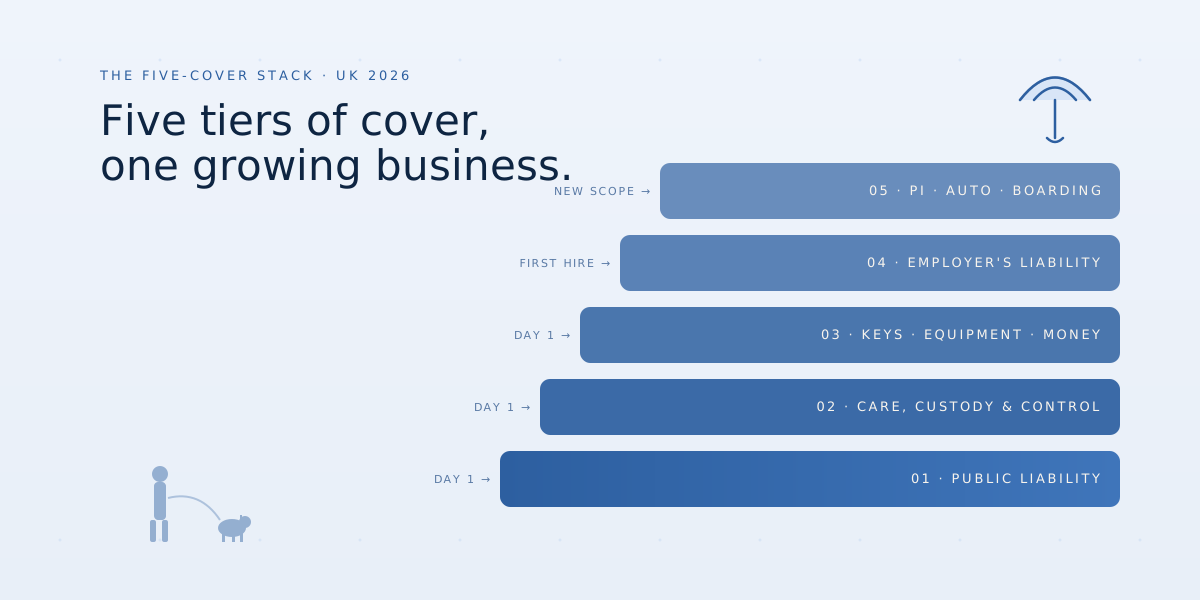
The framework below is what I call the five‑cover stack. It maps to the lifecycle of a dog walking business: a solo walker on day one needs the first three tiers. A walker who hires their first helper needs the fourth. A walker who adds boarding, training, or a second vehicle needs the fifth.
02 / FrameworkThe five‑cover stack.
Here it is in one block.
Each tier solves a different problem. Each tier has a different trigger event — something specific in your business that makes that tier go from “nice to have” to “absolutely required.” A solo walker in their first six months needs tiers 1–3. The moment they take on a single helper, tier 4 is a legal requirement under the Employers' Liability (Compulsory Insurance) Act 1969. The moment they add training advice, vehicle‑based pickups, or home boarding, tier 5 starts to bite.
The article walks each tier in order. The provider table at the bottom shows what each UK insurer actually bundles into a single policy — because in practice, you don't buy five separate insurance contracts. You buy one policy that bundles tiers 1–3 (and sometimes 4) by default and adds tier 5 on top.
03 / Public liabilityThe base layer.
Public liability is your insurance against the world outside the dog. It pays out when a third party — anyone who isn't you, your employee, or your client — has been injured or had their property damaged because of something connected to your business.
The standard limit in 2026 is £5 million, but £10 million is increasingly the floor for any walker working with corporate clients, council parks with a licensing scheme, or premises owners (vets, training fields, boarding kennels) who ask for proof of cover. Most large vet groups now write £10 million into their preferred‑supplier paperwork.
What it covers:
- A dog you're walking jumps up at a jogger and the jogger sprains their wrist.
- A child trips over the lead bundle in your hand.
- You knock a client's neighbour's wing mirror as you load three dogs into your van.
- A dog in your group fouls a council green and someone slips on the missed pile.
What it doesn't cover:
- Anything that happens to the dog itself.
- Anything that happens to property belonging to your client, in your client's house, while you're on a key‑holder visit.
- Anything an employee of yours does after their probationary day.
- Damage caused by something you advised the client to do.
Each of those gaps is filled by a different tier in the stack.
If your insurance documents say “£5 million public liability” and nothing else, you have one out of five tiers. Read the next paragraph slowly.
04 / Care, custody & controlThe layer nobody understands.
This is the tier that catches operators out, because the name is opaque and the cover is critical. Care, custody and control is shorthand for: insurance that pays out when the dog you are responsible for is injured, killed, lost, or stolen — or when something belonging to that dog (a collar, a coat, a Halti) is damaged or lost.
In Priya's case at the top of this article, the Cockapoo was in her care. Public liability didn't trigger because the dog wasn't a third party — she was the subject. Care, custody and control is the layer that pays the £2,840 vet bill.
Cliverton, the longest‑running specialist UK pet care insurer, includes unlimited Care, Custody and Control in its baseline policy from £140.84 a year. Pet Business Insurance includes £75,000 of accidents and injuries to animals (£25,000 per claim) within its £83.90 standard offer. Both are real cover, but the limits matter when the dog is a six‑month‑old French Bulldog with a six‑grand vet bill and a complicated recovery.
Real claim scenarios this tier handles:
- A slipped harness on Clifton Suspension Bridge — vet bills, lost‑dog recovery costs.
- A dog fight in the off‑lead enclosure at Hyde Park between two of your group — both owners look at you for the bill.
- A stolen Labrador from a car park while you nip into a petrol station — police statement, advertising, reward.
- A retractable lead snapping and the dog needing emergency dental work.
According to Cliverton's published claims data, care, custody and control is the most‑claimed tier of any dog walker policy — not public liability. Public liability claims are larger when they happen, but care, custody and control claims happen more often. Plan accordingly.
If your headline policy line says “public liability” and nothing about Care, Custody and Control, you do not have dog walking insurance. You have standing‑in‑a‑park insurance.— PackMonty Field Notes, editorial position
05 / Small extrasKeys, equipment, money.
Tier three is the high‑frequency, low‑severity tier. The claims here are small — usually £50 to £500 — but they happen four to six times a year for a busy walker with a multi‑key business.
Lost keys. You hold the front‑door keys for fourteen clients. One Friday, you can't find the bundle. Costs add up fast — locksmith call‑out (£140–£180 in central London, £80–£120 outside), new locks (£60–£140), new keys cut (£12–£20 per copy), and potentially the alarm reset (£75). Without key cover, that's a £400 bill out of your own pocket. With it, you pay an excess of £25 or £50 and the policy covers the rest.
Most UK pet‑business policies bundle £10,000 of key cover as standard. Cliverton, Pet Business Insurance, and Protectivity all include it. Read the small print: some policies require you to keep keys “in a locked container when not in use,” which means the bowl by your front door doesn't count.
Equipment. Your van's contents (the spare leads, the towels, the Halti collection, the rain coats), plus your phone and dog‑walking tablet. Pet Business Insurance covers £1,000 of equipment as standard. Cliverton's equipment cover is optional but cheap (around £15 a year for £2,000 of cover).
Money. Almost no one needs this any more — most operators take payment by bank transfer or Stripe, not cash. But Pet Business Insurance bundles £500 of money cover anyway, and it's harmless.
Add all three of these and you're paying maybe £40 extra a year for cover that, in practice, gets used at least once by every walker over £25,000 turnover.
06 / Employer's liabilityThe moment you hire.
The moment you employ one person, employer's liability insurance becomes a legal requirement under the Employers' Liability (Compulsory Insurance) Act 1969. The minimum cover by law is £5 million; the practical standard is £10 million and most UK pet‑business insurers won't quote you below it.
This is also where operators most often misunderstand their own staffing arrangements. The Act is broader than “employee” in the HMRC sense. If you have a family member, a partner, or a volunteer who takes responsibility for a client's dog under your business name — even occasionally — they are very likely covered by the Act, which means you are very likely required to insure them. Pet Business Insurance includes helpers and volunteers in its standard policy specifically because this confusion is so common.
The trickier case is the self‑employed sub‑walker. If you contract with another self‑employed dog walker who works under their own business name, holds their own public liability, and takes their own bookings, they are a contractor and you don't need employer's liability for them. If you set their walks, set their prices, set their schedule, and use your insurance to cover them, HMRC and an insurance loss adjuster will both look at the relationship as employment regardless of the paperwork. This matters when a claim is filed. The wrong classification voids cover.
“Just a friend helping out for a few hours” is the single most common reason employer's liability is missing when it should be there. If they take responsibility for a client's dog under your business name, they count. Add the cover. It's usually £40–£80 a year on top of your base policy and saves a six‑figure liability exposure.
When the first claim happens — a sprained wrist from a pulling Rottweiler, a fall over a tree root, a dog bite during a meet‑and‑greet — employer's liability is what pays the medical bills and any compensation. Without it, the employee can sue you personally. The Act exists because Parliament decided in 1969 that no employer should be able to dodge the bill. The fine for trading without it, even for a day, is up to £2,500 per day.
07 / Tier fiveProfessional indemnity, auto, boarding.
Tier five is the “your business has grown into new territory” tier. Three trigger events, three different add‑ons.
Professional indemnity
You need this the moment you start giving advice that a client pays for and relies on. A standard dog walk doesn't qualify. A puppy socialisation walk where you guide a new owner through correct lead technique, or a board‑and‑train arrangement where you return a dog with claimed behavioural improvements, does. Professional indemnity (PI) protects you when that advice is later blamed for a problem — a dog that develops reactivity, an owner who claims they were misled about training outcomes.
Cliverton offers £1 million of PI as an add‑on for roughly £45 a year on top of the base policy. Pet Business Insurance lists it as an optional extra. Most solo walkers don't need it; most walkers who run training, puppy classes, or board‑and‑train absolutely do.
Commercial vehicle insurance
The moment you transport client dogs in your vehicle for payment, your personal car insurance policy is invalid for that journey. Three major UK insurers — Direct Line, Aviva, LV= — explicitly exclude commercial pet transport. Your car policy must declare business use, class 3 with carriage of animals (or your insurer's equivalent wording). Specialist providers — Adrian Flux, Just Vans Insurance, Cliverton's own vehicle add‑on — write this cover properly.
The premium uplift for declaring business use is typically £80–£200 a year. The cost of having a claim refused because your insurer didn't know you were running a business is the full repair plus, in most cases, the full third‑party claim.
Premises and home boarding
If you board dogs in your own home — even occasionally, even for one client — you need a council licence under the Animal Welfare (Licensing of Activities Involving Animals) (England) Regulations 2018. Dog walking and pop‑in visits are explicitly exempt from AWLR licensing. Home boarding, day care, and commercial boarding kennels are not.
The licence is issued by your local authority. Fees range from £150 to £450 for a five‑star (annual) inspection, or £80 to £200 for a one‑star (more frequent inspection) starter rating. On top of the licence, your insurance needs a premises liability extension — most pet‑business policies include it as an upgrade for £30–£70 a year. Without it, a guest dog injured on your property is uninsured.
A full Field Notes piece on the AWLR home‑boarding licensing process is coming. The short version: get the licence first, then update the policy. Backwards order voids cover.
08 / ProvidersUK comparison, 2026 pricing.
This is the comparison table I've been asked for fifty times in the last two years. Prices are for a solo dog walker, England‑based, no claims history, public liability at £5 million unless stated.
| Provider | Solo starter | What's standard | Best for |
|---|---|---|---|
| Cliverton | ~£141/yr | £5M/£10M PL, unlimited CCC, £10k keys, non‑negligent cover | Walkers who want CCC unlimited and the strongest single‑bundle policy |
| Pet Business Insurance | £83.90/yr (£62.93 via NarpsUK) | £5M PL, £75k animal accidents (£25k/claim), £10k keys, £1k equipment, £1k travel | Multi‑service operators (walking + boarding + taxi) wanting one policy |
| Protectivity | from £65/yr (£5.41/mo) | £2M–£10M PL flex, CCC and equipment as paid extras | Solo walkers on a tight starter budget, flexible monthly billing |
| Simply Business | ~£79/yr (£6.62/mo) | £1M–£10M PL, CCC available, online instant cover | Walkers who want a familiar mainstream broker |
| NarpsUK group rate | ~£63/yr (with £29 membership) | Same as Pet Business Insurance but with the 25% group discount | NarpsUK members — cheapest route to PBI cover |
A few observations from running quotes on each in May 2026:
- Cliverton is the most expensive but the only insurer offering unlimited Care, Custody and Control as standard. If you walk dogs in central London, Edinburgh, or any high‑vet‑cost market, the maths favours Cliverton from year two onwards.
- Pet Business Insurance via NarpsUK is the cheapest credible option if you don't already pay for a trade association membership. The £29 NarpsUK membership effectively pays for itself in the insurance discount.
- Protectivity's website is the cleanest and gives you a real quote in under three minutes, which matters when you're setting up your business in the same week as your insurance.
Avoid: anyone quoting under £60 a year for a full pet‑business policy in 2026. It almost certainly excludes Care, Custody and Control, or it's a watered‑down liability‑only policy aimed at hobbyists. Read the schedule, not the headline.
09 / ClaimsHow claims actually work.
The single most common claim mistake isn't filing badly. It's not filing at all, then renewing the policy the next year without disclosing what happened. Insurance is rebuilt every year at renewal. Anything material you didn't tell the insurer about voids the new year's cover retroactively.
The 72‑hour rule. Most UK pet‑business policies enforce a reporting window of 72 hours from the incident, sometimes seven days. If a dog is bitten, a key is lost, a vase is broken, or a passer‑by is knocked over — you ring the insurer's claim line the same day. You don't wait to see if the client complains.
The two‑photo rule. Take a photo of the scene and a photo of the damage or injury. Date‑stamp them through your phone's metadata. This is the single most useful piece of evidence in a contested claim, more useful than any written statement.
The disclosure trap. When you renew, the insurer asks two questions: “Have you had any claims, losses, or incidents in the past 12 months?” and “Has anything changed about your business?” The temptation to answer “no” to the first one because the claim was small and you settled with the client privately is enormous. It also voids your next policy. Disclose everything. A near‑miss is not a claim, but a near‑miss that triggers a written complaint from a client is. If in doubt, write to the insurer.
1. Settled with the client privately, didn't tell the insurer. Voids your next renewal as material non‑disclosure.
2. Hired a helper but didn't add employer's liability. When the helper sprains a wrist, you're personally liable.
3. Transported dogs on a personal car policy. Insurer refuses the claim; you pay third‑party costs out of pocket.
10 / ConclusionOne thing for tomorrow.
The five‑cover stack isn't five separate insurance policies. It's a way of reading the one policy you already pay for — checking each tier against your actual business and adding what's missing before the claim happens, not after.
If you're a solo walker on day one, you need tiers 1–3 bundled in one policy. Pet Business Insurance via NarpsUK at £63/year is the cheapest credible route. Cliverton at £141/year is the best policy if you can afford it.
If you've just hired your first walker, add tier 4 today, not next month. The fine for trading without employer's liability is £2,500 per day, and the cover costs less than that for a year.
If you're growing into training, boarding, or vehicle‑based pickups, read tier 5 again and pick the one that applies.
The Cockapoo at the top of this article recovered. Priya's policy renewed with her new claims history disclosed. Her premium went up £40. The thing that didn't happen — and the reason this article exists — is the version of the story where she didn't have Care, Custody and Control, the £2,840 came out of her own pocket, and she stopped trading by Christmas.
That's the story this stack is designed to prevent.
— Elena Marquez, somewhere on a Tuesday morning, Bristol