Twenty per cent. Sometimes a lot more. That's what Rover UK, Tailster, Pawshake and BorrowMyDoggy take from every booking you complete on their platforms, before payment processing, before the seasonal discounts they push to customers without consulting you. If you're starting a dog walking business in the UK in 2026, the most consequential decision in your first ninety days isn't which lead you buy or how to design a logo. It's whether to fight that maths or feed it.
This piece is for the version of you that wants to fight it. It's a working operator's guide to building an independent UK dog walking business in three months, on the assumption that you intend to keep what you earn and grow it past a side hustle. We'll cover the legal floor, the pet first aid certification clients now look for, the first five direct clients, the five forms every client signs, the pricing maths the platforms work hard to obscure, and the HMRC IR35 rule that quietly catches UK dog walking operators in their second year of hiring. Stop reading and execute, and you'll be ahead of 80% of the people who started reading the same week as you.
01 / The forkThe decision the platforms force on you.
The UK dog walking market in 2026 looks structurally different from the US: no single platform has near-monopoly demand discovery. Rover (which acquired RoverGo in the UK), Tailster, Pawshake, BorrowMyDoggy and Cudo all compete for the same pet parents, and most are losing money. Their pitch is appealing: set your own hours, be your own boss, £800–£2,500 a month part-time. The maths is less appealing.
Rover keeps roughly 15–20% on UK bookings (plus VAT on the commission), effective take closer to 25% once promotional discounts and processing fees are stripped. Tailster runs a similar model. Pawshake and BorrowMyDoggy use cheaper subscriptions but with weaker demand signals. Most providers keep about £12 of a £15 booking on Rover UK, before paying their own Class 2 and Class 4 NICs on that £12.
That's not a side-hustle problem. It's a business-model problem. Every pound generated on a platform is permanently a pound minus 15–25%. You can never raise that ceiling; the only way to earn more is to walk more dogs and the loss of every direct-client opportunity compounds across the year.
None of this is a polemic against the platforms. They're excellent for someone testing whether dog walking suits them at all (near-zero overhead, instant demand, real reviews). They are a useful audition; they are not a business. Conflating the two is the single most common mistake new UK operators make in 2026.
02 / The frameWhy 90 days, why three windows.
There are 13.5 million dogs in the UK as of 2026, and 41% of households own one. The market is real. What stops most new operators isn't demand. It's that they treat starting a business as a single, undifferentiated mountain of work, when it is in fact three smaller mountains with completely different shapes.
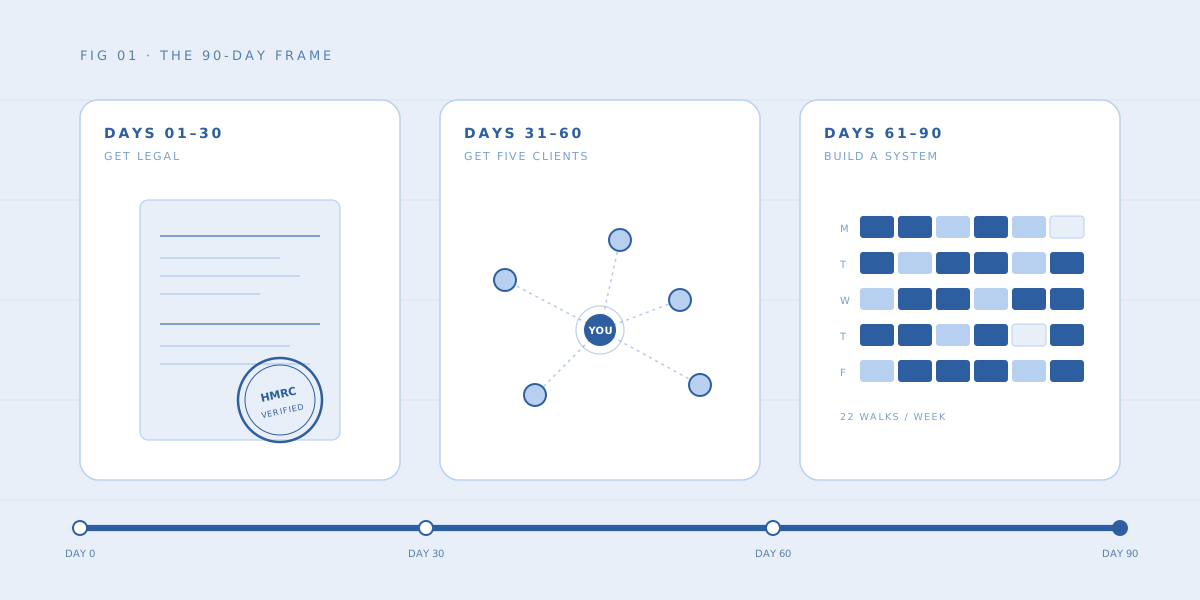
PackMonty's 90‑Day Frame separates them deliberately. Each window has a single test of completion. If you can pass that test, you move on. If you can't, the next window won't fix it.
- Days 1–30, Test: can you legally walk a dog you don't own, for money, tomorrow morning, and be insured if something goes wrong?
- Days 31–60, Test: are five different households paying you directly, every week, with no platform sitting in the middle?
- Days 61–90, Test: if you got hit by a bus tomorrow, would the business survive? Does anyone else know which dog gets walked when, where the keys live, and who to call?
Only the first window has admin. The second is sales. The third is operations and the IR35 question. Conflating them is the single biggest reason new UK operators feel overwhelmed: they're trying to design a logo while they should be knocking on doors.
03 / What you can earnThe honest UK income picture.
Before HMRC, before anything else, the question that matters: what does this work pay, realistically, in the UK? More than the platforms suggest, less than Instagram dog walker influencers imply, and almost entirely dependent on whether you build direct or rent demand from Rover UK. The numbers decide whether this is a side hustle, a primary income, or a family business in three years.
The 2026 income picture (Indeed UK, Talent.com, 2026 PDWA member survey, and the operators we work with):
- Solo independent at full capacity (22–28 walks/week at £15–£18): £18,000–£25,000 gross.
- Net after public liability insurance, vehicle, fuel, equipment, Class 2 + Class 4 NICs and Income Tax: £14,000–£20,000.
- London / South East: add 20–30%.
- Year-two with one walker under PAYE: £35,000–£50,000 net.
- The hard single-owner ceiling: around £30,000.
Indeed's 2026 average is £27,473 (£14.64/hour); a useful sense-check that lumps gig-platform walkers in with self-employed independents. The pets you serve, not the prices you advertise, decide the long-term success of the business.
Business expenses do real damage to that net number. Fuel and vehicle maintenance run £120–£300/month. Public liability insurance and DBS combined add £6–£15/month. Class 2 NICs (£3.45/week) and Class 4 NICs (9% on profits £12,570–£50,270) take a slice; Income Tax kicks in at 20% above the £12,570 Personal Allowance. Your real take-home is gross minus all three, not just the platform commission.
For the full breakdown of the five career paths inside “dog walking jobs” in the UK, the companion article on UK dog walking jobs in 2026 runs the take-home maths path by path.

04 / The auditionBefore day one, what to confirm.
The question nobody asks new operators: do you actually want to be a dog walker, or do you want the idea of one? Three weeks of walking other people's dogs in real UK weather will answer it faster than any course will. There are three cheap, fast tests you can run inside thirty days, all before paying for a website or a logo or a limited company formation. They sort the people who'll love this work from the people who think they will.
The actual UK working week, bank holidays included
Professional dog walking is like being a postie: rain or shine. A full-time route runs 5–7 hours a day across morning, midday, and afternoon blocks, with split breaks rather than a single lunch. You will rough it in dark February mornings, soaking October afternoons, and humid July weeks. Snacks in the car, water everywhere, real food at the end.
Bank holidays drive a meaningful share of revenue and you cannot fully take them off. Easter, the early May bank holiday, late August, Christmas Eve through New Year's Day, and the summer school holidays are when clients travel and overnight bookings spike. Many UK operators we work with earn 20–30% of annual revenue across those windows. Build a holiday rotation with any staff. Set a holiday surcharge (£3–£8 per visit). It meaningfully changes the year.
Why a local pro beats the platform every time
Independent operators thrive next to Rover UK and Tailster on trust transfer, not pricing. Pet parents handing over a key want to recognise the person at the door each morning, not whoever the platform routed today. Local pros earn word-of-mouth referrals platforms cannot: a neighbour at the dog park, a vet receptionist passing your business cards in the lobby, a Google review naming you. The platform worker is a stranger with a uniform. The local pro is the person the dog already trusts.
Three months of walking dogs you don't own
Walk eight to ten friends' or neighbours' dogs for free, twice each, over four weeks. Three things become clear, fast: which breeds you click with, how your body holds up across a thirty-walk week, and whether a wet October Tuesday at 7am is still appealing on walk six.
Pet first aid certification, £40 to £145
Take a real course before your first paid walk. Animal Aiders runs an online canine first aid certificate for around £40 in about ninety minutes. Pet Tech UK runs in-person sessions for £85–£145 in most cities and is the most-recognised UK credential. Canine First Aid 4 Pets UK and ProTrainings UK are the established online programmes. The certificate goes on your website, your leaflet, and your service agreement. It's the cheapest credibility you can buy.
| Course | Provider | Cost | When it pays back |
|---|---|---|---|
| Canine First Aid (online) | Animal Aiders | £40 | Day one essential |
| Pet First Aid & CPR | Pet Tech UK | £85–£145 | In-person; most recognised credential |
| Canine First Aid (online) | ProTrainings UK | £35 | Online alternative if Animal Aiders booked out |
| Level 2 CTC Dog Walking | City & Guilds | £250–£400 | Year one; improves quote-conversion trust |
| Canine Care Level 2/3 | iPet Network | £99–£199 | Lighter alternative to City & Guilds |
| Dog Walking certificate | Lantra (accredited) | £150–£300 | Industry-recognised CPD |
| NarpsUK CPD bundle | NarpsUK | Bundled with membership | If you join NarpsUK anyway |
| Dog Handler / Behaviour | IMDT | £200–£500 | Year two; specialise into training |
One block of shelter or rescue volunteering
The industry's best-kept secret: most UK shelters (Dogs Trust, Battersea, your local Blue Cross) run handler training programmes for volunteers covering lead manners, calm-greeting techniques, dog handling safety, and how to read a stressed animal. Two months of this teaches you more than any £400 course will, and it gives you a reference that doesn't say “my mum.” The safety skills you learn here, what to do when a dog freezes, when to disengage, when to ring the owner, are the difference between a clean year and a vet bill.
Experience, qualifications, and the dog behaviour vocabulary
Experience beats qualifications in the eyes of UK clients, but qualifications close the trust gap when experience is thin. The minimum to put on a leaflet: a canine first aid certificate (£40), a Basic DBS Disclosure (£21.50), and a single recognisable course like the City & Guilds Level 2 CTC or an iPet Network certificate. None of these are a legal requirement, but all three together carry real weight at a meet-and-greet. Add a Lantra-accredited course or NarpsUK CPD to deepen the lifestyle commitment to the work.
The dog behaviour vocabulary you need on day one is small but specific. Read up on body language basics: calming signals (lip-licking, yawning, look-aways), displacement behaviour (scratching, sniffing the ground at an odd moment), the four thresholds (curious, alert, aroused, reactive). Most injuries to a walker happen because the warning signals were visible and missed. Build exercise routes that reduce injury risk: avoid livestock fields with an unknown dog, pick off-lead exercise in fenced commons over open countryside in months one to three, and route around triggers (other dogs, joggers, cyclists) for reactive clients. The best advice from operators we work with: when in doubt, the dog stays on lead.
05 / Days 1–30The lean UK starter kit.
Day one, register with HMRC as a sole trader
Day one, go to gov.uk and register as a sole trader for Self Assessment. Twelve minutes, free; HMRC posts a Unique Taxpayer Reference (UTR) within a week. You can start trading immediately. The legal deadline is 5 October of your second trading tax year, but every UK accountant we've asked says register on day one; you'll need the UTR for insurance and bank account anyway.
Choose your trading entity
Three real options for UK trading.
- Sole trader. The default. Free to register, no Companies House filing. Class 2 NICs (£3.45/week) and Class 4 NICs (9% / 2%) on profits, plus Income Tax. Cheapest, simplest, no liability protection. Fine for year one.
- Limited company. Incorporated via Companies House for £50 online (1stformations and similar agents charge from £12). Adds liability protection: if a dog you're walking bites someone and they sue, your personal assets (house, savings, pension) are insulated from a Ltd Co claim. Worth it once profit passes £30,000 or you start hiring. You'll need an annual confirmation statement and abbreviated accounts. Director's NI and dividends tax mechanics change the take-home, so speak to an accountant before forming.
- Partnership. Two or more self-employed partners sharing profits. Useful for husband-and-wife operations. Limited Liability Partnerships (LLPs) add a layer of protection at £71 with Companies House.
For a Ltd Co, the 1stformations team and most accountants we work with agree: don't form one before you have revenue. The protection is real but the bookkeeping cost is also real, and a sole trader with adequate insurance is genuinely sufficient for the first six months.
Reading US dog walking guides? Here's the UK translation
Many of the most-shared dog walking startup guides online are written for the US market. The principles transfer; the terminology does not. Three structural things diverge meaningfully. The UK has no direct LLC equivalent (the closest is a fully-incorporated Limited Company at Companies House). The US has 50+ state employment law regimes (an ABC test in California, common-law test federally); the UK has one HMRC employment status test (CEST) backed by IR35 rules. And US dog walking cover bundles bonding separately, whereas UK public liability insurance typically bundles care/custody/control, key cover, and non-negligent cover in one quote.
| Topic | US term | UK equivalent |
|---|---|---|
| Business entity | LLC (Limited Liability Company) | Limited Company (Companies House) |
| Sole-operator structure | Sole proprietorship | Sole trader |
| Trading name (no entity) | DBA (Doing Business As) | Sole trader trading name (no separate filing) |
| Tax authority | IRS | HMRC |
| Tax identifier | EIN (Employer Identification Number) | UTR (Unique Taxpayer Reference) + PAYE Reference |
| Hiring framework | W-2 employee / 1099 contractor | PAYE employee / IR35 self-employed |
| Background check | Sterling / Checkr | DBS Basic Disclosure (gov.uk) |
| Insurance | General liability + fidelity bond | Public liability + key cover + non-negligent |
| Local-rules layer | State / city business license | Council licence / PSPO / AAL |
| Variation by region | States (50) | Councils (343 in England) + devolved nations |
| Spelling (others, neighbour) | Neighborhood | Neighbourhood |
| Vehicle fuel | Gas | Petrol / Diesel |
| Premises rules | City zoning | Council planning + AAL home boarding |
| Pension | 401(k) (not employer-mandated) | Auto-enrolment workplace pension (mandatory) |
| Walk vocabulary | On-leash / off-leash | On lead / off lead |
If you have already read an LLC-first US guide and are now wondering whether to form an LLC equivalent for UK dog walking services, the short answer is no, not in month one. Stay sole trader. Form a Limited Company once profits cross £30,000 or you start hiring others under PAYE. The same logic applies to a US DBA: in the UK, a sole trader can simply trade under any name they choose without a separate filing, provided the name isn't taken by another business entity at Companies House. Most US business structure questions resolve to that single difference.
Pick a business name (and a domain)
A lot of new operators spend two weeks agonising over a name and a logo when the right approach is twenty minutes and a coffee. The structure that works: a noun (your neighbourhood, an animal trait, a dog you grew up with) plus a verb or service noun (“walks,” “pack,” “trails”). Examples: Sheffield Wagtails, Brixton Bounce, Bristol Paws, Edinburgh Trails.
Three quick checks before you commit. Search the UK IPO trade mark database to confirm the name isn't already registered in Class 41 or 44. Search the name plus your town on Google to confirm no local competition uses it. Check whether the .co.uk domain is available on Namecheap or 123 Reg; skip .biz and .info, clients won't remember them. If you're forming a Ltd Co, also check Companies House for availability.
Public Liability insurance, the trifecta UK clients look for
Public Liability insurance is the one thing you cannot skip. £1 million is the floor; £2 million is what most UK clients now expect on a Public Liability certificate. The four specialist providers: Cliverton, Protectivity, Pet Business Insurance, and Pet Plan Sanctuary. Premiums start at £6–£12 a month (£72–£144 a year). Standard policies bundle care/custody/control (covers a dog injured in your care), non-negligent cover, key cover, and equipment cover. Without the pet-specific endorsement, generic small-business cover won't pay out. Get the certificate as a PDF before your first paid walk. The full breakdown sits in the companion article on UK dog walking insurance and the five-cover stack.
The DBS Basic Disclosure, the £21.50 lever
A Basic DBS Disclosure (£21.50, applied direct via gov.uk) is the cheapest credibility lever you have in the UK. Many councils now require it to issue a dog walking licence, and most clients ask about it before handing over keys. The phrase “insured, DBS-checked, and animal first aid certified” on your leaflet does more for conversion than a logo, a uniform, and a wrapped van combined. Apply directly via the government's official Disclosure Service; third-party agents charge a 200% mark-up for nothing.

| Provider | Monthly cost | Care / custody / control | Membership discount |
|---|---|---|---|
| Protectivity | £6–£10 | Yes | 5% via PDWA, 5% via NarpsUK |
| Pet Business Insurance | £7–£12 | Yes | 25% via NarpsUK Silver / Gold |
| Cliverton | £8–£14 | Yes | Quote on application |
| Pet Plan Sanctuary | £9–£15 | Yes | Quote on application |
Business plan, permits, and council restrictions
You do not need a formal business plan to start trading as a sole trader. You do need one if you raise finance, apply for a Start Up Loan from the British Business Bank (£500–£25,000), or want to think clearly about your first-year numbers. A one-page operational plan with target clients, expected revenue, expenses, and break-even is more useful than a 40-page document; the Prince's Trust template works well.
Council permits and restrictions matter long before the AAL home boarding licence does. Local authorities publish Public Spaces Protection Order maps showing where group walking, off-lead exercise, or commercial dog walking is limited or prohibited. Check your borough or district council's parks pages. Some areas have summer-only restrictions (Essex, Devon, parts of Lincolnshire). Some boroughs require a permit for groups above a minimum threshold (often four). Royal Parks, National Trust sites, and many country parks have separate requirements. Walk-able access does not mean commercially permitted access.
If you intend to hire even one walker, Employers' Liability insurance is a legal requirement under the Employers' Liability (Compulsory Insurance) Act 1969, with a £5 million minimum coverage. Most UK pet business insurance providers add it for £3–£8 a month when you flag PAYE staff on the policy.
The supporting floor
Free business bank account (Starling, Tide, Mettle, Monzo Business open in fifteen minutes and integrate with Making Tax Digital). Free Google Business Profile, drives roughly 70% of “dog walker near [postcode]” searches. Free Yell.com listing. A £15-a-month Squarespace or Wix site hosting the insurance certificate, service agreement PDF, and contact form. Eighty leaflets at Vistaprint (£20–£40). You don't need a logo. You need a working number on a leaflet.
The three associations worth knowing
You don't need every one. You probably want one. NarpsUK (National Association of Registered Pet Sitters), from £77/year, includes a starter contract, discounted Pet Business Insurance, and a member directory profile. PDWA (Professional Dog Walkers Association), £45/year, includes a twelve-document template pack and a Protectivity discount. Pet Industry Federation covers wider commercial pet care; useful once you offer boarding. IMDT (Institute of Modern Dog Trainers) is training-focused and pays back later if you add training services.
Total for a lean sole trader: £93.50–£200 in month one, plus £72–£150 a year for insurance, plus optional £45–£77 association fee. Anyone telling you that you also need a Ltd Co, a registered trade mark, a £400 City & Guilds course, and a custom-branded van before your first paid walk is selling you something.
06 / What servicesThe seven your UK clients actually book.
The temptation is to launch with one service, dog walking, and figure out the rest later. That is also the fastest way to leave money on the table. Most UK clients book one of seven services, and offering all of them lets you stack revenue against a stable client base instead of chasing new acquisitions. The seven types of work UK clients pay for in 2026, and what each one earns:

1. Solo walks, the precious core
30 or 60-minute on-lead or off-lead walks for one dog. The premium tier. Anchors what your other services charge against. Mind the trip maths: a 30-minute walk that needs a 15-minute drive each way is a one-hour job.
2. Group walks, the unit-economics tier
Two to four dogs in a park or open route. Lower price per dog, higher revenue per hour. Council bylaws cap group sizes in many boroughs (Lambeth caps at six, Royal Parks at four). Pre-screen for reactivity, recall, and whether the dogs get along. PDWA recommends four; insurers allow six.
3. Pop-in visits, the schedule-filler
A 20-minute visit to feed, water, and let the dog out for a wee. Used by clients whose dog has limited mobility, by puppies who can't hold it through a workday, or as a cheaper second-of-day option. Stacks neatly between morning and afternoon walks. £10–£15 in most UK postcodes.
4. Home boarding, the AAL-licensed tier
Dog stays at the walker's home overnight. Requires a council licence under the Animal Welfare (Licensing of Activities Involving Animals) Regulations 2018 in England. Council inspectors visit; star rating affects fee (1-star £100–£400, 5-star renews faster). Pays £25–£45/night; the single biggest revenue lever once you've passed twenty clients. Scotland and Northern Ireland use devolved equivalents.
5. Puppy starter package
Three 15-minute visits per day for puppies under six months. Wee breaks, basic socialisation, food top-ups, plus the slack moments to teach a five-minute trick that delights the client. £25–£40 per day total. Marketing this as a distinct package wins puppies-for-life.
6. Senior gentle walks
Slower-paced, lower mileage, more standing-around-sniffing. Same per-walk rate as a solo walk. Worth marketing separately; the senior-dog market is loyal and price-tolerant. Senior dogs and reactive dogs share a calmer handling vocabulary, see our field guide to handling a scared dog on a walk.
7. Pet taxi and medication administration
Vet appointments, groomer drop-offs, evening medication doses. Specialty add-ons at £15–£30 per visit. Not your first service, but useful once you have five regular clients.
Beyond the core seven, the bookable add-ons
Once the core seven are running, UK clients book a long tail of smaller services that compound revenue without much marginal complexity. The ones worth offering, with rough rates:
- Dog running (jogging route, energetic dogs), same rate as a solo walk plus £3.
- Dog hiking (off-lead trail, group of 2–4 hand-picked dogs), £25–£45 per 90 minutes.
- Dog park visits (drive to local off-lead park, monitor play), £15–£25 per hour.
- Training reinforcement (basic obedience, not formal qualifications), £20–£35 per session.
- Emergency visits (vet-bound, sick dog, owner snowed in), flat £25–£40 plus mileage.
- Dog waste cleanup (yard service, weekly), £10–£20 per visit.
- Pet food pickup and delivery, £5–£15 over cost.
- Plants watered, post collected, home security checks (pet-sitting add-ons), £3–£10 per visit each.
- Pet wedding attendant (a growing UK niche), £150–£400 per event.
Keep the marketing mind simple: lead with the core seven, mention the add-ons on the services page, and let clients ask. The best types of clients are the ones who book three services across a year, not one. Pet sitting (full vacation cover) and daycare are different businesses entirely and are worth leaving for year two or three. Most of the seven services share the same animal first aid and dog handling certifications, so adding the next service rarely means adding the next course. The operational aspects of stacking services (route planning, insurance scope, time blocks) are the same; only the customer-facing pitch changes.
07 / GeographyWhere council and devolved nation matter.
The single biggest variable in your first year isn't how many walks you book. It's which council you operate in. The UK has four devolved nations with overlapping welfare law, plus 343 English councils with wildly inconsistent dog walking licensing schemes, plus Public Spaces Protection Orders (PSPOs) that can quietly cap group sizes overnight.
A useful map of the extremes:
- No scheme. Most UK councils don't have a professional dog walking licence at all. Walk within insurance limits, observe PSPOs, comply with the Dangerous Dogs Act and Highway Code, you're trading.
- Lambeth, Camden, Hillingdon, Hackney. Professional dog walking licence schemes priced by group size. Lambeth: up to two dogs £65.26, up to four £130.53, up to six £391.58.
- Richmond. £141.67 plus VAT for a six-dog licence on six designated sites.
- The Royal Parks (Hyde, Regent's, Greenwich, Bushy, Richmond Parks). £225–£300 a year, cap of four dogs.
- Home boarding councils. Every English council issues home boarding licences under the AAL Regulations 2018. Fees £100–£500, inspections required, star rating affects renewal frequency.
- Devolved nations. Scotland uses local authority licensing under the Animal Health and Welfare (Scotland) Act 2006. Wales mirrors England's AAL. Northern Ireland licences under the Welfare of Animals Act 2011.
Spend an hour on your council's parks and licensing pages before you launch. Search “professional dog walking licence” plus your council name. If a scheme exists, that's your starting point. If it doesn't, you're probably fine to operate, but check PSPOs (Public Spaces Protection Orders) which can be issued under the Anti-social Behaviour, Crime and Policing Act 2014 and quietly cap groups or restrict areas.
| Jurisdiction | Requirement | Typical cost | Friction |
|---|---|---|---|
| Most UK councils | No professional walking licence; comply with PSPOs and Highway Code | £0 | Lowest |
| Lambeth (London) | Tiered professional licence by group size | £65–£392/yr | Medium |
| Richmond (London) | Licence for six designated sites, six-dog cap | £142 + VAT/yr | Medium |
| Royal Parks | Permit, four-dog cap, designated parks | £225–£300/yr | Medium |
| Camden, Hackney, Hillingdon | Active scheme or consulting | Varies | Medium |
| Home boarding (all English councils) | AAL Regulations 2018 licence + inspection | £100–£500 | High |
| Scotland | Local authority licence (Animal Health and Welfare Scotland Act 2006) | Varies | Medium |
| Wales / Northern Ireland | Devolved Animal Welfare licensing | Varies | Medium |
Choosing your service radius (and protecting your fuel budget)
Where you offer services matters as much as which council you launch in. In central London or Manchester, trying to service the whole city is a route to driving across town all day and walking nothing. Start with one or two adjacent postcodes and grow organically. In a small town or rural location, you may need to cover several villages to hit capacity; the maths changes, but the principle holds: every additional mile is fuel money and time that does not bill.
Calculating travel time and fuel before you accept a new client is the difference between a profitable round and a busy-looking one. The rough rule operators we work with use: a new client must sit inside a 10-minute drive of an existing booking, or be worth a separate dedicated trip at premium pricing. Hunt the underserved areas in your town instead of fighting for the saturated ones. If three competing walkers all cluster in the same postcode, the postcode next door is often the one with a lot of demand and no supply.
08 / Days 31–60Five direct clients, off the platforms.
This is where most UK operators give up and sign back into Tailster. The five-client launch is a deliberate four-week sequence that lands the first five paying direct clients without renting demand from anyone.
The platform exit, by personal note
If you're on Rover UK, Tailster, Pawshake or BorrowMyDoggy, the fastest path is the personal note. Pick eight or ten favourite platform clients, the ones who book repeatedly, tip well, treat you like a professional. Send each a personal email: “I'm moving my business off Tailster next month. The walks stay the same. The price will be slightly lower than you're paying Tailster today. Here's my GoCardless or bank transfer link.” Six of ten follow you. The other four are doing you a favour by staying on the platform.
The door-knock playbook
If you don't have a platform base to convert, pick two adjacent postcodes, print 80 leaflets (called flyers in US guides; the design rules are the same; £20–£40 at Vistaprint), and walk the streets on a Saturday morning. The script is short: “Hi, I'm Tom, I've just started Sheffield Wagtails dog walking. I'm offering a free 20-minute meet-and-greet to dog owners on this street, no obligation. Got a leaflet here.” The leaflet has your name, mobile number, three services with prices, your insurance certificate number, and your DBS reference. No logo. The 17.5% reply rate is the typical median for door-to-door leaflets and flyers in residential UK postcodes; expect 10–25% depending on neighbourhood.
The meet-and-greet, and the eight questions to ask
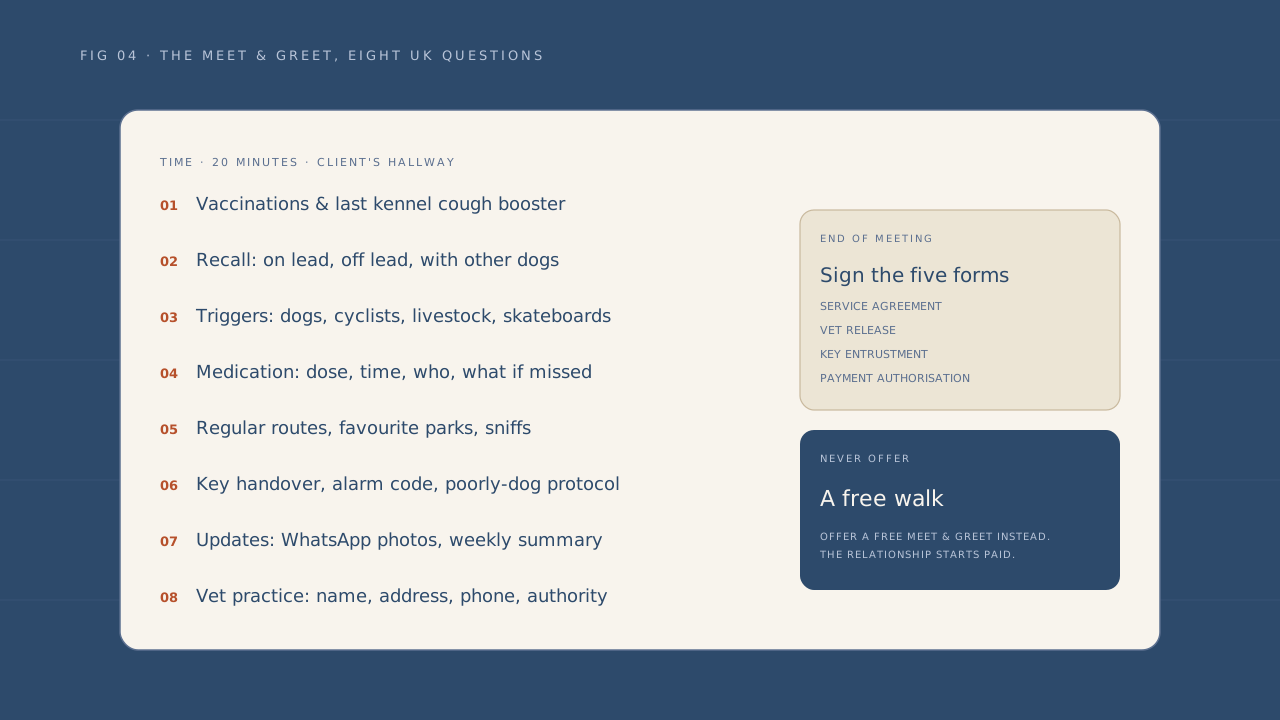
Never offer a free walk. Offer a free meet-and-greet, a twenty-minute conversation in the client's hallway where you take notes on the dog, hand over a printed contract, and book the first paid walk. A free walk teaches the client that your work is free. A free meet-and-greet teaches them that your work is professional and starts the relationship paid.
What to cover at every meet-and-greet, in order:
- Vaccination status and date of the last booster (kennel cough especially).
- Recall reliability: on lead, off lead, and with another dog present.
- Reactivity triggers: other dogs, strangers, cyclists, skateboards, livestock.
- Medication: dose, time, who administers, what happens if missed.
- Regular routes, favourite parks, and what they like to sniff.
- Key handover: where the key lives, what the alarm code is, what the “dog is poorly” protocol is.
- Client expectations: photo updates, app notifications, written notes, weekly summary.
- Veterinarian: practice name, address, phone, and the answer to “what authorises treatment in an emergency.”
You answer these in twenty minutes, or you reschedule. You hand over the contract at the door, signed before the first walk.
Tom is fictional, but the maths reflects the patterns we see across operators we work with. The story is consistent: clients who already trust you on a platform will follow you off it if asked plainly, and you'll earn more even after charging them less. The platforms' entire economic case rests on customers not knowing how much the platforms take.
09 / MarketingHow UK clients actually find you.
The door-knock playbook in Section 08 is the cold-start engine. Once you have five direct clients, the system that scales the next twenty is different. UK dog walkers in 2026 acquire clients through five channels that work, two that look like they work but don't, and one universal multiplier called reputation. The information in this article's marketing section is the most useful content in the whole piece for any operator past month two.

The five channels that work
Google Business Profile, Yell.com, vet practice partnerships, dog park presence, neighbour referral. In that order.
Google Business Profile is free and drives roughly 70% of “[town] dog walker” UK search traffic (BrightLocal 2026 local SEO survey). Get verified the week you launch, add eight photos, reply to every review within 24 hours. Yell.com is half as important but still earns a free listing. Combined, the two cover everyone in your town searching for a walker on a phone.
Vet practice partnerships, the under-used channel
Walk into three local vet practices on a Wednesday afternoon (their quiet day). Bring printed business cards, a one-page services sheet, and a small thank-you (dog treats or a coffee shop voucher for the front desk). Ask the receptionist whether they keep a referrals folder for dog walkers. Six of ten will say yes. Three of those six will send a real client within a month. PDWA and NarpsUK publish free articles and resources on these partnerships; the templates are worth the membership fee alone.
Dog park presence, networking with a lead
Walk a friend's dog at your local dog park during the popular 5pm to 7pm window twice a week. Make eye contact. Don't pitch. Wear a polo with a small logo. Two months of this consistently produces four to six client conversations. The dog park is also where you learn who already uses a walker and what the local rates are: market research disguised as small talk.
Social media, the honest take
Instagram is worth one account, posted twice a week, mostly client dogs (with permission) on routes. The point is not to grow followers; it is to be findable by clients who Google your business name. Facebook business pages are nearly dead for local services in 2026, but local Facebook groups (your town's Spotted group, your borough's dog owners' group) earn neighbour-of-neighbour referrals. Join three local groups; respond, don't post. TikTok is a content rabbit hole; ignore it until year three. Nextdoor UK is occasionally useful for postcode-level enquiries.
The referral programme that actually works
Neighbour referral is the strongest signal you can buy, but a lot of operators don't build the system for it. Run a referral programme with a clear structure: £15 off the referrer's next month, or a £15 donation to a local rescue (Battersea, Dogs Trust, your nearest Blue Cross) in their family's name. Each referral costs you £15 and brings in roughly £1,100 in annual revenue. The ROI is absurd.
Reputation, the moat that compounds
Google reviews are the single highest-leverage marketing asset you build. Target 25 reviews in year one, 50 by end of year two. The system: ask every client after the third week of service, in person, “if you've been happy with us, a Google review really helps the business.” That sentence converts at about 30%. After 25 reviews at 4.8 stars or higher, your competition in town cannot catch up without spending money you no longer need to.
Advertising, growth strategy, and branding moves that work
Advertising and marketing are different. Marketing is the standing investment in reputation (reviews, GBP, vet partnerships, referral programme). Advertising is the paid push for a specific outcome (event sponsorship, leaflet drops in a new postcode, targeted Facebook ads for the August school-holiday rush). Both have a place; new operators conflate them and overspend on advertising before marketing assets exist.
Branding is not a logo. It is the consistent set of visual and verbal cues your customers see across leaflets, business cards, your van or car magnet, your polo shirt, your social media photography, your Yell.com listing, your NarpsUK directory profile, and your PDWA member badge. Pick a colour, a typeface, and a photo style on day one and use them everywhere. The benefits of consistency compound at year two when you have 25 reviews, 8 vet practice listings, and the local Spotted group recognises your van on sight.
Your growth strategy in year one is single-postcode density before geographic expansion. Get to 20 clients in two adjacent postcodes before you add a third. Year two: hire one walker, get them to capacity in the same area, then expand. Year three: open a second postcode cluster, or specialise (senior dogs, reactive dogs, off-lead hikes). The opportunity to grow exists only after you have proof you can serve the clients you already have.
What doesn't work in year one
Paid Google Ads (£400+ per month, marginal returns). Bark.com and StarOfService leads (same lead sold to three competitors). Branded merch products like t-shirts and reusable bottles (vanity items, not channels). Magnetic car signs without a wrap. Save the budget for year two.
The biggest issues new operators have are doing all of these at once, badly, and tracking none of them. Pick three channels in year one. Track which channel each client found you through. Get each producing two clients a month. Then add the fourth.
The ten pages every UK dog walking website needs
Whichever channel sends a prospective client your way, all roads lead back to a website. A simple Squarespace or Wix site, built in a Friday evening, needs ten pieces of content laid out clearly. They do not each have to be a separate page; many can be sections of a longer homepage. But the information has to exist somewhere a client can find it in seven seconds:
- Homepage, what you do and where you do it, in one sentence above the fold.
- About, your name, your story, your photo, your insurance certificate number.
- Services, the seven core services and the add-ons, with prices.
- Service area, the postcodes and neighbourhoods you cover.
- FAQ, the eight questions clients ask before booking (cancellation, late payment, keys, poorly dog).
- Reviews, embedded Google reviews or testimonials with full names.
- Blog, two posts a quarter is enough; it is the local SEO lift.
- Policies, cancellation, holiday surcharge, late-booking, in plain English.
- Jobs, even if you have not hired yet; it signals you intend to grow.
- Contact, a form and a real mobile number, not a generic info@ email.
10 / The formsThe five every UK client signs.
The default mode is to text the client “yes” to whatever's needed. It works until someone rings you at 2am because their dog has eaten a sock and wants to know if you'll pay the vet bill. Five documents, signed at the meet-and-greet, head off the 2am call. The five contracts together are the single biggest source of professional responsibility you can give a UK client on day one. NarpsUK includes templates with membership; PDWA's twelve-form pack covers GDPR, risk assessment, and incident reporting. Get a one-hour solicitor review before you use any of them the first time.
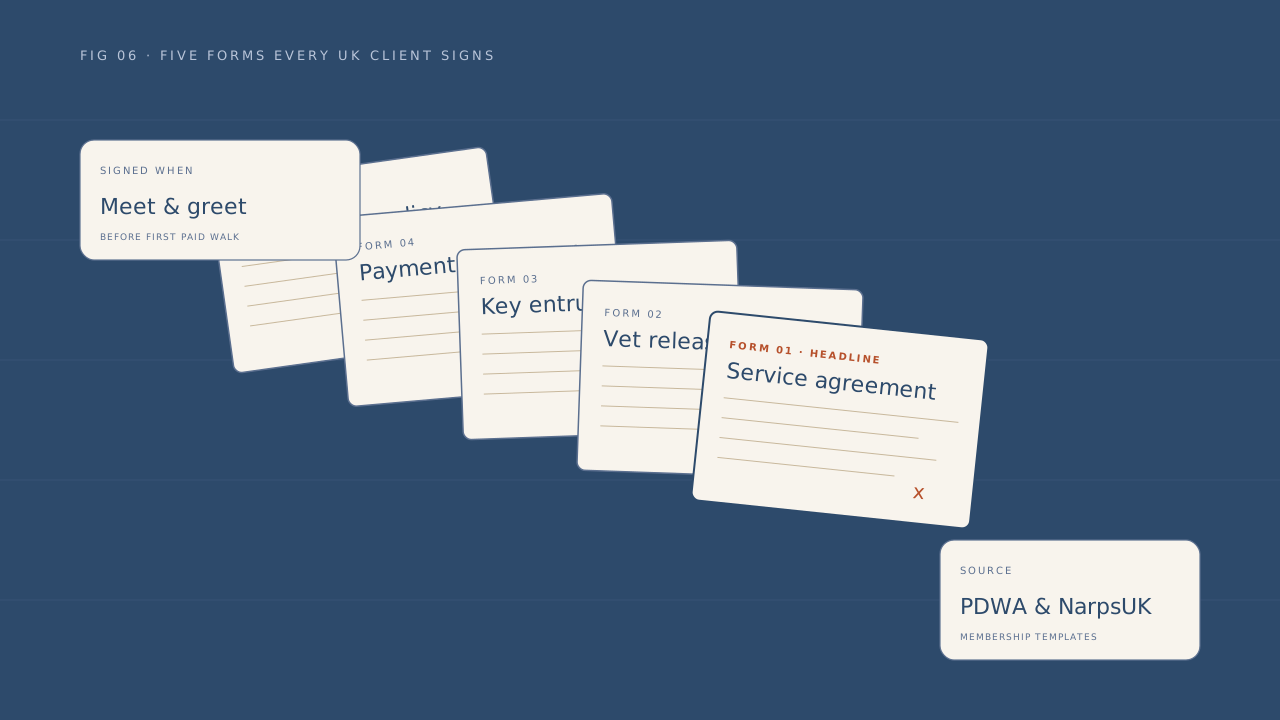
1. Service agreement (Terms and Conditions of Engagement)
The headline document. What you'll do (walk length, frequency, feeding, water top-ups), what's not included (medication, training), how cancellations work, when payment is due, and the limitation of liability. Two pages, two signatures.
2. Vet release form
A short standalone document giving you authority to seek emergency veterinary treatment, capped (typically £500–£1,000) before you must reach the owner. Without it the vet won't treat and you're personally exposed.
3. Key release entrustment form
Acknowledges which keys you hold, how many copies, where stored, what happens if one is lost, and whether you're authorised to enter when the dog isn't present. The single most important form for a UK business.
4. Payment authorisation form
Client's authorisation for your payment processor (GoCardless, Stripe, standing order via your business bank account) to charge on a recurring schedule. Removes the awkward weekly invoice; removes bad-debt risk.
5. Cancellation policy
Read by every client; written into the service agreement. Most operators settle on 24 hours' notice, full charge for less, half charge for a same-day cancel by the operator if the dog is poorly. Write it down before you need to enforce it.
11 / PricingThe maths the platforms hide.
The 2026 UK average for a 30-minute walk is £13.48 according to industry data, with London and the South East running 1.5–2× that. Both numbers are useful as anchors, useless as price floors. The right price isn't the average. The right price is the one at which you can deliver good work without resentment, after platform fees if any. For the full mechanic of pricing tiers and the take-home maths after Class 2 + Class 4 NICs, see the companion piece on UK dog walker pricing and the Five-Number Rate.
Local market research, what your street already pays
Before you set a price, spend an afternoon researching the local competition in your town. Open Rover UK and Tailster, filter to your postcode, and list every active walker's solo and group rates. Open Google Maps and search “dog walker” within five miles; note the businesses with five-star ratings and read their pricing pages. Talk to anyone you know with a dog walker and ask what they pay. Most UK neighbourhoods have a clear two-tier market: the platform walkers charging £10–£14, and the established independents charging £15–£25. Your floor sits above the first tier and your ceiling sits at the top of the second. Information about what your competition charges is a five-times better anchor than any national average.
The maths nobody on the platform side wants you to do
A £15 walk on Tailster, after the 15–20% commission and processing, nets you about £12.30. The same client booked direct at £14 nets you £13.60 after GoCardless (1% + 20p). The customer paid £1 less. You took home £1.30 more per walk. Multiplied across 22 walks a week, that's an extra £28.60 per week, or £1,373 a year, on the same workload. The only loser was Tailster.

If you're currently on a platform, your direct-client price floor is whatever the platform's sticker price minus 10% comes out to. You'll still earn more. The customer will still feel they got a deal.
Anchor the price to the platform's number, not the local average.
The three-tier structure
The structure that holds at scale: solo walk (£18–£25 in London, £14–£18 elsewhere), group walk (£14–£18 / £10–£14), pop-in visit (no walk, just feed and wee, £10–£14 / £8–£12). Solo gets you the precious clients. Group gets you the unit economics. Pop-ins fill the schedule gaps and stack neatly between morning and afternoon walks. Three tiers cover roughly 95% of UK demand.
The launch-undercut trap
A common mistake new operators make: undercutting on launch to fill the diary fast. It works for three weeks and traps you for eighteen months, because raising prices on existing clients is roughly five times harder than starting them at the right price. Set your floor where it should be from day one. Launch at £1–£2 per walk above the local average with a confident, written explanation of what's included (insured, DBS-checked, animal first aid certified, written report after every walk, max group of four).
Display prices on the website and disclose every fee
Prospective clients judge your professionalism in the seven seconds they spend on your services page. Visible pricing builds trust before the first phone call; hidden pricing reads as something to negotiate, which is a smaller market. Post your three core tier prices and the typical packages (weekly four-walk, two-walk, pop-in). Show prices in pounds, not “from.”
Disclose the five fees most UK walkers charge but few document well, in writing, on the same page:
- Late-booking fee (booked under 24 hours out), £3–£8.
- After-hours surcharge (walks before 7am or after 7pm), £3–£10.
- Bank holiday surcharge (eight UK bank holidays plus Christmas Eve through New Year's Day), £3–£10 per visit.
- Additional pet fee (a second dog in the same household, sharing the walk), £3–£7.
- Same-day cancellation fee, half-rate as per the cancellation policy.
Apparent to clients from the get-go, billed without conversation. The transparency does the conversion work the price tag itself cannot. Clear prices on a website also reduce no-show losses, because the customer who saw the price online turns up expecting it.
12 / Days 61–90The system, and the IR35 trap.
Months three and four are when most independent UK operators hit a wall. The diary fills up. Memory becomes the only system. Then they decide it's time to hire staff.
Three records that have to exist by day ninety
Client cards, one per dog, with vet, microchip, key code, behavioural notes, recall reliability, emergency contact. Walk log, one row per walk, every walk: dog, time, route, walker. Key register, whose key, which keyring, where it lives, what the procedure is when one is lost. NarpsUK, PDWA, and Pet Business Insurance all have free templates. Use one.
Software, and the client number where it earns its keep
Spreadsheets work for the first twenty clients. Past that, dedicated software starts to pay back. NarpsUK's system (£12–£30/month, bundled with membership), Pet Sitter Plus (UK-origin, £25–£55/month), BookedIN and Precise Pet Care are the established UK options, with Time To Pet as the US-built alternative. We're biased (we make PackMonty), but the principle is independent of the tool you choose: pick one before client number twenty, because migrating from a spreadsheet at fifty is genuinely awful.
| Software | Monthly cost | Best for | Notable feature |
|---|---|---|---|
| NarpsUK system | £12–£30 | Solo to small UK teams | Bundled with NarpsUK membership; UK-specific forms |
| Pet Sitter Plus | £25–£55 | Established UK teams (3+ walkers) | UK origin; most customisation |
| BookedIN | £15–£40 | Booking-focused operators | Online booking + payments, lean feature set |
| Precise Pet Care | £18 | Bootstrap solo operators | 30-day free trial; UK and US-friendly |
| Time To Pet | £25–£55 | UK operators wanting US-built polish | Full PAYE-friendly payroll integration |
| PackMonty (in beta) | TBD | Operators who care about design | Hand-built UI, modern stack |
The IR35 trap, employed not self-employed
This is the section that costs people money. You almost certainly cannot legally pay your dog walkers as self-employed contractors in the UK. HMRC's Check Employment Status for Tax tool (CEST) and the IR35 off-payroll working rules look at who controls the work. If you assign routes, set the schedule, provide the insurance, provide the software, set the rates the client pays, and take the booking yourself, the worker is an employee under UK law. They must be paid through PAYE with Income Tax and Employee's NI deducted, you pay Employer's NI (15.05% above £9,100), and they qualify for auto-enrolment workplace pension contributions from day one.
HMRC's three-part test, mutuality of obligation, control, and personal service, is met by virtually every dog walking arrangement. Your walkers are employees in the eyes of HMRC. They cannot legally be self-employed even if they sign a contract saying so, even if they prefer it, even if they have other clients.
If HMRC reclassifies a worker mid-investigation, back tax, NI, and interest typically come to 30–40% of total wages paid, plus penalties up to 100% of unpaid tax. Your insurance carrier may decline to cover incidents during the misclassification period. Small UK operators have been wound down by exactly this. HMRC publishes the CEST tool; run it for every hire before you offer a contract. Run PAYE through Xero Payroll, Sage, or QuickBooks (£15–£30/month) from the first hire.
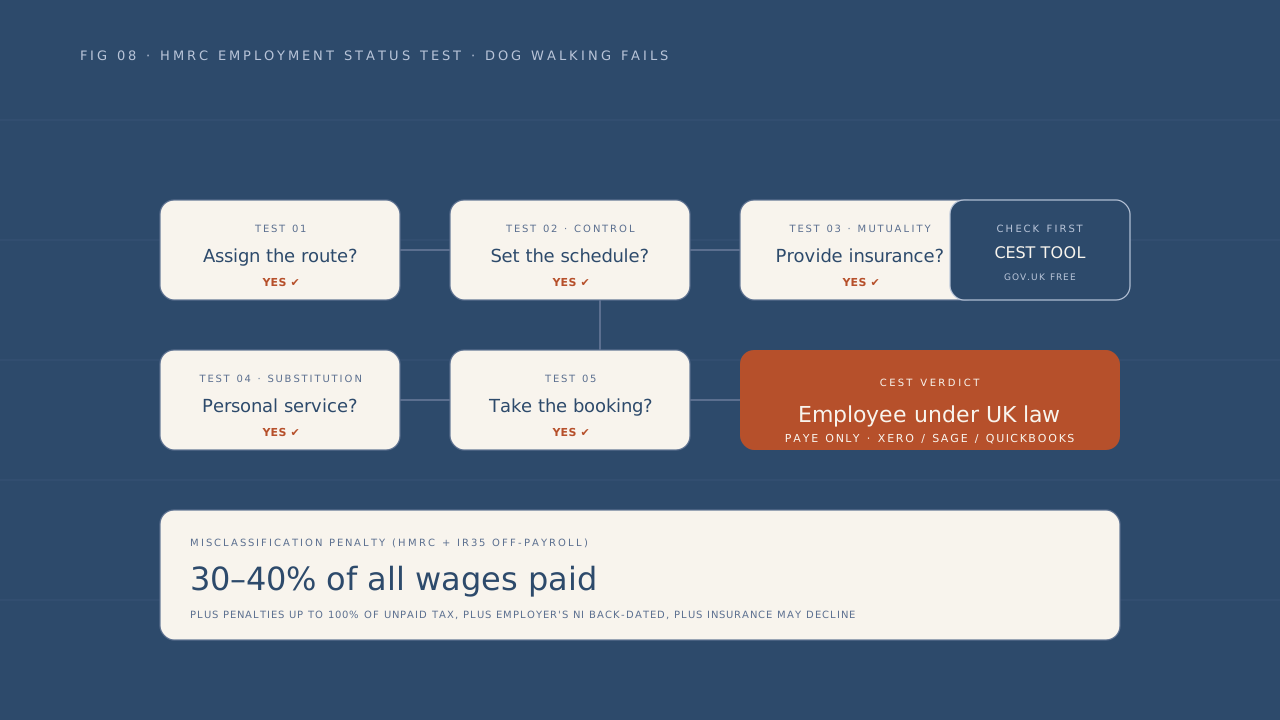
The IR35 test is structural, not negotiable. Set the schedule, set the routes, set the rates, and UK law says employee. ‘They prefer self-employed’ is not a defence HMRC accepts.– Karen, who runs a six-walker operation in Tooting
13 / Anti‑patternsSix UK‑specific traps.
1. Living on a platform “just for experience” forever
The first three months on Rover UK, Tailster or Pawshake is a useful audition. Beyond that, slow self-capping. Set a deadline when you sign up (sixty days, ninety days). Exit on schedule whether or not you feel ready; you never will.
2. Hiring as “self-employed”
HMRC's IR35 and employment status rules make this unworkable for dog walking. Pay walkers through PAYE with Income Tax and Employee's NI deducted, file RTI submissions, run a real payroll service (£15–£30/month for Xero or Sage). Compliance costs £500–£800 a year per walker including Employer's NI. Getting it wrong potentially costs the business.
3. Skipping the AAL home boarding licence
The Animal Welfare (Licensing of Activities Involving Animals) Regulations 2018 require a council licence for home boarding, doggy day care, and dog breeding in England. Running unlicensed is a criminal offence under the Animal Welfare Act 2006 with fines up to £5,000 and up to six months in prison. Apply before advertising overnight bookings. Scotland, Wales, and Northern Ireland have equivalent licensing under devolved legislation.
4. Trying to scale across multiple boroughs at once
Borough-by-borough licensing variation makes geographic expansion much harder in the UK than in most countries. Pick one borough or town. Get to capacity (~22–28 walks per week per walker) before you hire. Stay six months. Only then look at the next.
5. Chasing a niche in year one
Niche-led marketing (only senior dogs, only reactive dogs, only off-lead hikes) is real, but a year-three move, not year-one. In year one you don't yet know what you're good at or what your area pays a premium for. Start broad. Get to twenty clients. Then specialise on the patterns you noticed, not the niche you imagined.
6. Skipping a website because “Google Business Profile is enough”
GBP is necessary but not sufficient. A simple Squarespace or Wix site (build it in an evening, £15/month) does three things GBP can't: hosts the insurance certificate PDF, shows the service agreement, and ranks for “[your town] dog walker” queries GBP doesn't reach. Make it on Friday night. Move on.
14 / ConclusionThree steps for tomorrow morning.
Pick three steps for tomorrow. Not the most exciting, the most consequential. If you're on Rover UK or Tailster, count what you paid them last year; that number is the answer to whether to go independent. If you haven't started, register with HMRC at gov.uk: twelve minutes, free, the legal-floor checkpoint everything else builds on.
Tomorrow afternoon, walk a dog you already know, for free, for an hour. Take notes on what you forgot to ask. The next morning, do it again with a different dog. By the end of week one you'll have done more than most people who set out to start a UK dog walking business this year.
Three tips operators we work with wish someone had given them on day one. Pay insurance and DBS invoices the day they arrive, not the day they're due. Run a DBS check on yourself first, then on every staff member you hire. Never let safety paperwork lag (meet-and-greet questions, vet release, key entrustment). The boring administrative discipline is the actual moat.
The 90‑Day Frame is permission to stop trying to do everything at once. Days 1–30, 31–60, 61–90. Three windows, one job each. Decline the platforms, find five direct clients, sign the five forms, build a system before you need one, and pay your walkers through PAYE. Do that, and at the end of ninety days you will own a business, not rent one.
– Elena Marquez, somewhere between a meet-and-greet and a Self Assessment deadline, Bristol