Twenty percent. Sometimes thirty‑one. That's what Rover and Wag take from every booking you complete on their platforms, before payment processing, before insurance markups, before the seasonal discounts they push to customers without consulting you. If you're starting a dog walking business in America in 2026, the most consequential decision in your first ninety days isn't which leash you buy or how to design a logo. It's whether to fight that math or feed it.
This piece is for the version of you that wants to fight it. It's a working operator's guide to building an independent US dog walking business in three months, on the assumption that you intend to keep what you earn and grow it past a side hustle. We'll cover the legal floor, the pet first aid certification clients now look for, the first five direct clients, the five forms every client signs, the pricing math the platforms work hard to obscure, and the IRS rule that quietly kills US dog walking operators in their second year of hiring. Stop reading and execute, and you'll be ahead of 80% of the people who started reading the same week as you.
01 / The forkThe decision America forces you to make.
The US dog walking market in 2026 looks structurally different from any other in the world for one reason: two private companies, Rover (NASDAQ: ROVR, $1B+ market cap) and Wag (smaller, public, struggling), have effectively become the entry point most new walkers use to find their first clients. They function the way Uber did for drivers and DoorDash did for couriers: a glossy front door with a hidden tax behind it.
The pitch is appealing: set your own hours, be your own boss, $1,500–$3,500 a month part‑time. The math, when you look at it, is less appealing. Rover keeps a 20% commission on standard bookings (25% on RoverGO walks). Wag's effective take is closer to 40% once promotional discounts and processing fees are stripped out. According to industry surveys, most providers keep about $24 of a $30 booking on Rover, before paying their own self‑employment tax on that $24.
That's not a side‑hustle problem. It's a business‑model problem. Every dollar you generate on a platform is permanently a dollar minus 20–40%. You can never raise that ceiling. The only way to earn more is to walk more dogs. Your time has a hard cap.
None of this is a polemic against the platforms. They're excellent for someone testing whether dog walking suits them at all (near‑zero overhead, instant demand, real reviews). They're a useful audition. They are not a business. The two are different things, and conflating them is the single most common mistake new US operators make in 2026.
02 / The frameWhy 90 days, why three windows.
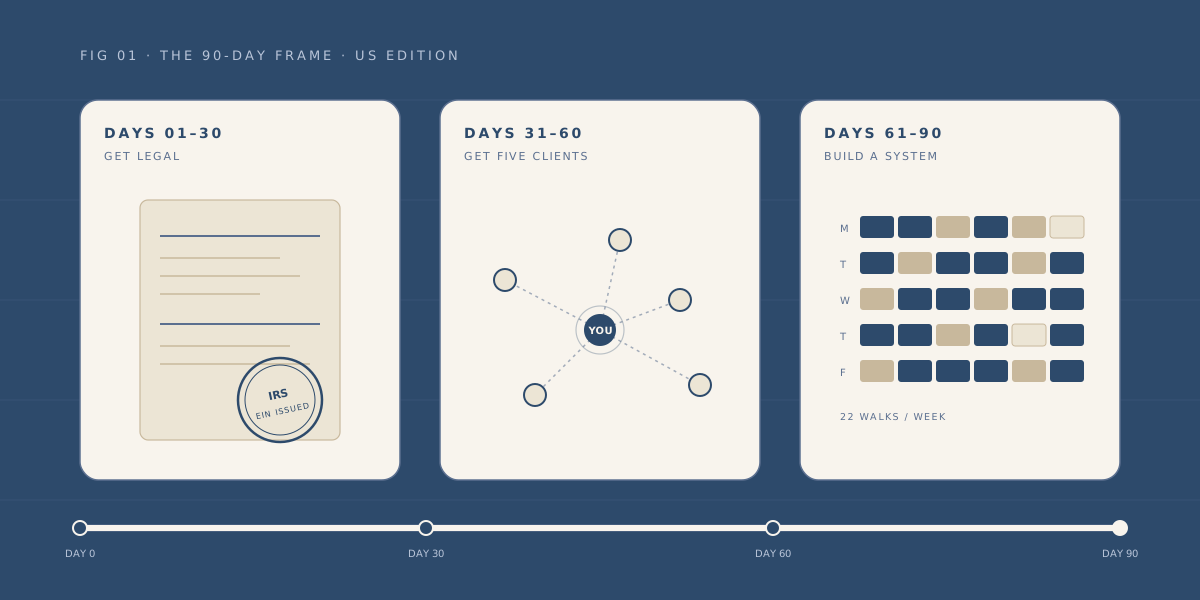
PackMonty's 90‑Day Frame is a sequencing tool we've evolved across the businesses we work with. It splits the first three months into three independent windows, each with one job. Most new operators try to do everything at once and stall. Three windows, three tests, and the order is enforced.
- Days 1–30, Test: are you legally allowed to walk a dog you don't own, for money, tomorrow morning, with insurance that pays out if something goes wrong?
- Days 31–60, Test: are five different households paying you directly, every week, with no platform sitting in the middle?
- Days 61–90, Test: if you got hit by a bus tomorrow, would the business survive? Does anyone else know which dog gets walked when, where the keys live, and who to call?
The frame does extra work in the US because the platform fork lurks at every step. You have to actively decline shortcuts in window one, acquire clients without renting them in window two, and avoid making yourself an accidental employer in window three. We'll come back to that last one. It's the section that costs people money.
03 / What you can earnThe honest US income picture.
Before the audition, before the EIN, before anything else, the question that matters: what does this work pay, realistically, in the United States? More than the platforms suggest, less than the Instagram dog walker influencers imply, and almost entirely dependent on whether you build direct or rent your demand from Rover. The numbers determine whether this is a side hustle, a primary income, or a family business in three years.
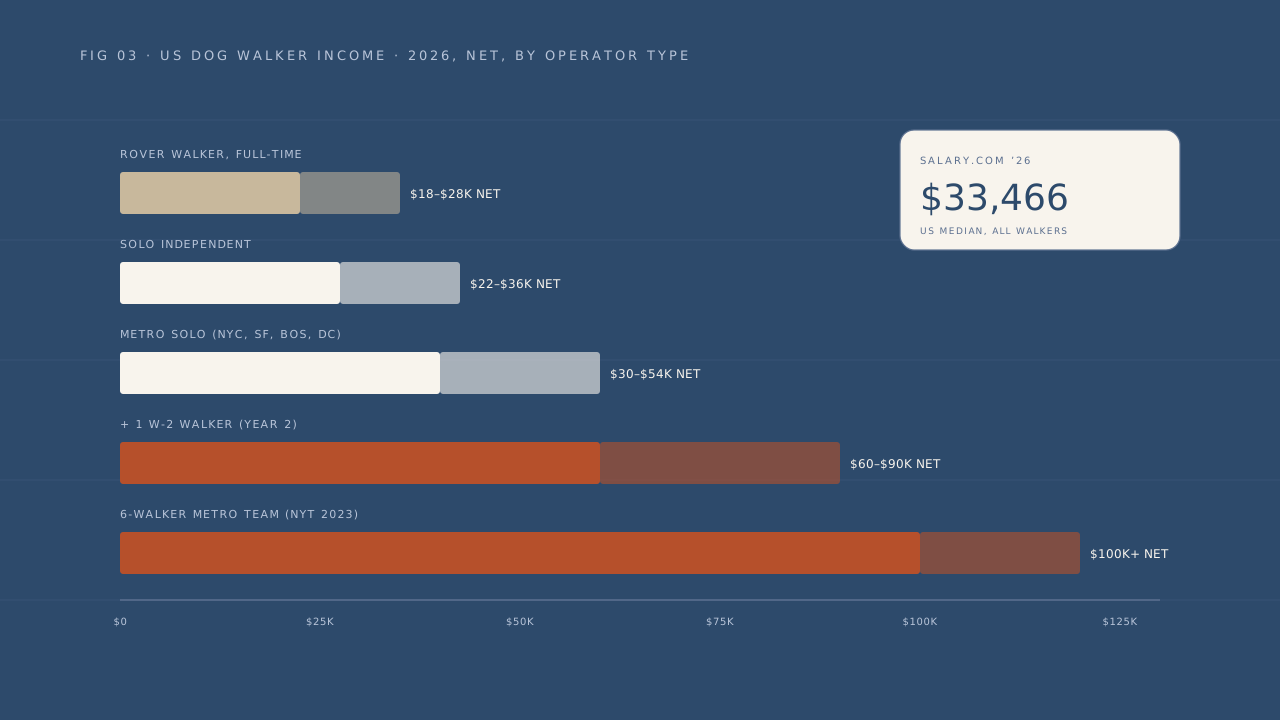
The 2026 income picture, drawn from salary.com, Indeed data, the 2026 PSI industry survey, and the operators we work with:
- Solo independent at full capacity (22–28 walks per week at $25–$35): $30,000–$48,000 gross revenue annually.
- Net income after insurance, vehicle, gas, equipment, and self‑employment tax: $22,000–$36,000.
- NYC, San Francisco, Boston, DC metros: add 30–50%.
- Year‑two operator with one W‑2 hired walker: $60,000–$90,000 net.
- The hard single‑owner ceiling, before you hire: around $55,000.
The 2023 New York Times piece on dog walkers earning $100,000+ in NYC was real but rare; those operators ran six‑walker teams, not solo routes. A useful sense‑check for the average operator is the salary.com 2026 median of $33,466.
A few business expenses do real damage to that net number, and most new operators underestimate them in three predictable ways. Gas and vehicle maintenance for a route‑based operation runs $200–$400 a month. Insurance and bonding combined adds another $25–$70 a month. Self‑employment tax (15.3% on net) takes a big slice off the top. Your real take‑home is the gross minus all three categories, not the gross minus only the platform commission.
The benefits of going direct compound year over year. Every dollar of price increase on a direct client is a dollar you keep. Every Rover increase splits five ways. The confidence to weather a slow month, the kind of certainty that stops you walking away in week six, comes from running these numbers before the first paid walk, not the morning after a 7am cancellation in February. For the full breakdown of the five career paths inside “dog walking jobs” (gig platform, hourly W-2, independent, your own business, shelter), the companion article on US dog walking jobs in 2026 runs the take-home math path by path.
04 / The auditionBefore day one, what to confirm.
The question nobody asks new operators: do you actually want to be a dog walker, or do you want the idea of one? Three weeks of walking other people's dogs in real weather will answer it faster than any course will. There are three cheap, fast tests you can run inside thirty days, all before paying for a website or a logo or an LLC. They sort the people who'll love this work from the people who think they will.
What the week actually looks like, hour by hour
Professional dog walking is much like being a mail carrier: rain or shine, the job must get done. Your schedule will rarely be the same from one day to the next. You will be in constant motion, spend a lot of time outdoors, and visit several client residences a day, which means real travel between stops. It is physically demanding. You will rough it in inclement weather, cold mornings in February, soaking afternoons in October, plus or minus the heat of a Texas July. A typical full-time route runs 5 to 7 hours a day across morning, midday, and afternoon blocks, with split breaks rather than a single lunch hour. Plan your meals like a tradesperson: snacks in the car, water everywhere, real food at the end. People who love the work love this shape. People who don't bounce in month two.
Holidays, the peak revenue you cannot take off
The honest part of the lifestyle: holidays drive a meaningful share of your annual revenue, and you cannot fully take them off. The Fourth of July, Thanksgiving, the week of Christmas and New Year, Memorial Day, Labor Day, and spring break are when your clients travel and pet sitting and overnight bookings spike. Many operators we work with do 20–30% of their annual revenue across those windows. That has two implications. You build a holiday rotation with any staff you hire so nobody works all of them. And you set a holiday surcharge ($5–$15 per visit) that clients accept readily and that meaningfully changes your year. The boring lesson: plan your own family holiday windows before the calendar fills with client bookings, not after.
Why a local pro beats the app every time
The reason independent operators thrive next to Rover and Wag is not pricing. It is trust transfer. When pet parents hand over a key, they want to recognise the person at the door each morning, not whoever the app routed today. Local operators get word-of-mouth referrals that the gig apps structurally cannot earn: a neighbour mentions you to another neighbour at the dog park; a vet receptionist hands out your business cards in the lobby; a Google review names you specifically. The gig-app worker is a stranger with a uniform. The local pro is the person the dog already trusts. The economics follow the trust, every time.
Three months of walking dogs you don't own
Before you spend a dollar, walk eight to ten friends' or neighbors' dogs for free, twice each, over four weeks. You learn three things, fast. Which breeds you click with. How your body holds up across a thirty‑walk week. And whether a wet October Tuesday at 7am is still appealing on walk number six.
Pet first aid certification, $25 to $200
Take a real course before your first paid walk. The American Red Cross online cat and dog first aid course is $25 and runs about ninety minutes. Pet Tech runs in‑person sessions for $145 to $200 in most metros and is the most‑recognized US credential. ProTrainings and PetProHero are the established online programs. The certificate goes on your website, your flyer, and your service agreement. It's the cheapest credibility you can buy.
One block of shelter volunteering
The industry's best‑kept secret: most municipal shelters run Behavior and Enrichment (B&E) programs that train volunteers in leash manners, calm‑greeting techniques, dog handling safety, and how to read a stressed animal. Two months of this teaches you more than any $500 certification will, and it gives you a reference that doesn't say “my mom.” The safety skills you learn here, what to do when a dog freezes, when to disengage, when to call the owner, are the difference between a clean year and a vet bill.
05 / Days 1–30The lean US starter kit.
Day one, get an EIN
Day one, you go to irs.gov and apply for an Employer Identification Number. Ten minutes, free. You're not legally required to have one as a sole proprietorship (technically you can use your Social Security number), but every accountant we've ever asked recommends getting one anyway. It keeps your SSN off paperwork that strangers will see. And the moment you hire even one contractor for a single weekend, you'll need it.
Choose a business entity
Three real options for your business entity.
- Sole proprietorship. The default. No filing. Business income reported on Schedule C of your personal 1040. Cheapest, simplest, no liability protection. Fine for year one.
- DBA (“Doing Business As”). Sole prop with a registered business name, $10–$50 county filing in most states. Lets you bank under a business name without forming an entity.
- LLC. Limited liability company. $40 in Kentucky, $70 plus an $800/year minimum tax in California, $500 in Massachusetts. Adds liability protection: if a dog you're walking bites someone and they sue, your personal assets (house, savings, retirement) are insulated. Worth it once revenue passes ~$30,000 or you start hiring. Note the BOI report (FinCEN beneficial ownership filing) now applies to most LLCs. Don't skip it.
For an LLC, Wolters Kluwer's legal team and most accountants we work with agree: don't form one before you have revenue. The protection is real but the bookkeeping cost is also real, and a sole proprietorship with adequate insurance is genuinely sufficient for the first six months.
Pick a business name (and a domain)
A lot of new operators spend two weeks agonising over a name and a logo when the right approach is twenty minutes and a coffee. The structure that works: a noun (the dog you grew up with, your neighbourhood, an animal trait) plus a verb or service noun (“walks,” “pack,” “trails”). Examples: Maple Pack, Quincy Trails, Tucker's Walk, Brookline Bounce.
Three quick checks before you commit. Search the trademark database TESS to confirm the name is not already registered in US Class 35 or 41 (the relevant business classes for pet services). Search the name plus your city on Google to confirm no local competition uses it. Check whether the .com domain is available on Namecheap; skip .net or .biz, clients won't remember them.
The name needs to fit on a business card, sound like a sentence on the phone (“Hi, this is Maya from Austin Wagtails...”), and be different enough from the competition that clients remember it. Anything more elaborate is busywork.
Liability insurance, the trifecta US clients look for
Liability insurance is the one thing you cannot skip. General liability with a “care, custody and control” endorsement, $1 million minimum, $2 million increasingly expected. The four specialist providers are Pet Sitters Associates, Business Insurers of the Carolinas (accessed through PSI or NAPPS membership), Pet Care Insurance, and Kennel Pro. Premiums start at $14–$50 a month. Generic small‑business GL won't cover an animal injured in your care; you need the pet‑specific endorsement. Get the certificate as a PDF before your first paid walk. The full breakdown of which cover handles which scenario sits in the companion article on US dog walking insurance and the five-cover stack.
Bonding, the second layer most operators skip
A fidelity bond is not insurance; it is a different product that does a different job. Liability insurance covers an injury to a dog or property damage caused by an animal in your care. A bond covers theft, dishonesty, or property damage caused by you or your employees. Bonds are inexpensive ($100–$300 a year for $10,000–$25,000 coverage per claim) and remove the largest single objection potential clients raise about handing you a key. They also matter the instant you hire: a client's trust transfers to your employees only because they trust the paperwork you put in front of them.
US clients increasingly expect the trifecta on a flyer or website: insured, bonded, and background‑checked. Without all three, you compete on price with someone who has all three. With all three, you compete on quality. The benefits of the bond are not legal protection (that is the insurance's job); they are conversion at the meet‑and‑greet. Most clients will not ask about bonding explicitly. All of them will notice it on your contract paperwork. Pet Sitters Associates, Business Insurers of the Carolinas, and Pet Care Insurance all bundle bonding products with their insurance.
Background check, the $25 lever
A Sterling or Checkr background check ($25–$50, one‑time) is the cheapest credibility lever you have. The phrase “insured, bonded, and background‑checked” on your flyer does more for conversion than a logo, a uniform, and a wrapped van combined. The check pulls criminal history, sex offender registry status, and (optionally) a driving record. Run yours before your first paid walk.

| Provider | Monthly cost | Bond bundled | Membership required |
|---|---|---|---|
| Pet Sitters Associates | $14–$30 | Optional add-on | No |
| Business Insurers of the Carolinas | $20–$45 | Yes | PSI or NAPPS |
| Pet Care Insurance | $15–$40 | Yes | No |
| Kennel Pro | $25–$50 | Yes | No |
The supporting floor
Free business bank account (Mercury, Novo, Bluevine open in fifteen minutes online). Free Google Business Profile, which drives roughly 60% of local search traffic. Free Yelp listing. Your city's general business license if it requires one ($30–$200 in most places that do). Eighty flyers printed at FedEx Office ($20–$40). A $15‑a‑month Squarespace or Wix site that holds the insurance certificate, the service agreement PDF, and a single contact form. You don't need a logo. You need a working number on a flyer.
The three associations worth knowing
You don't need every one. You probably want one. NAPPS (National Association of Professional Pet Sitters), $165/year, includes a starter contract, group‑rate insurance access, and certification programs. Pet Sitters International (PSI), $150/year, includes a Pet Sitter Locator listing and discounted Business Insurers of the Carolinas access. PUPS (Professional United Pet Sitters) and IACP (International Association of Canine Professionals) are training‑focused and pay back later, when you hire and need credible CV material for your walkers.
Total cost for a lean sole prop in most states: $40–$200 in your first month, plus $170–$600 a year for insurance, plus an optional $150–$165 association fee. Anyone telling you that you also need an LLC, a registered trademark, a $500 certification, and a wrapped SUV before your first paid walk is selling you something.
06 / What servicesThe seven your clients actually book.
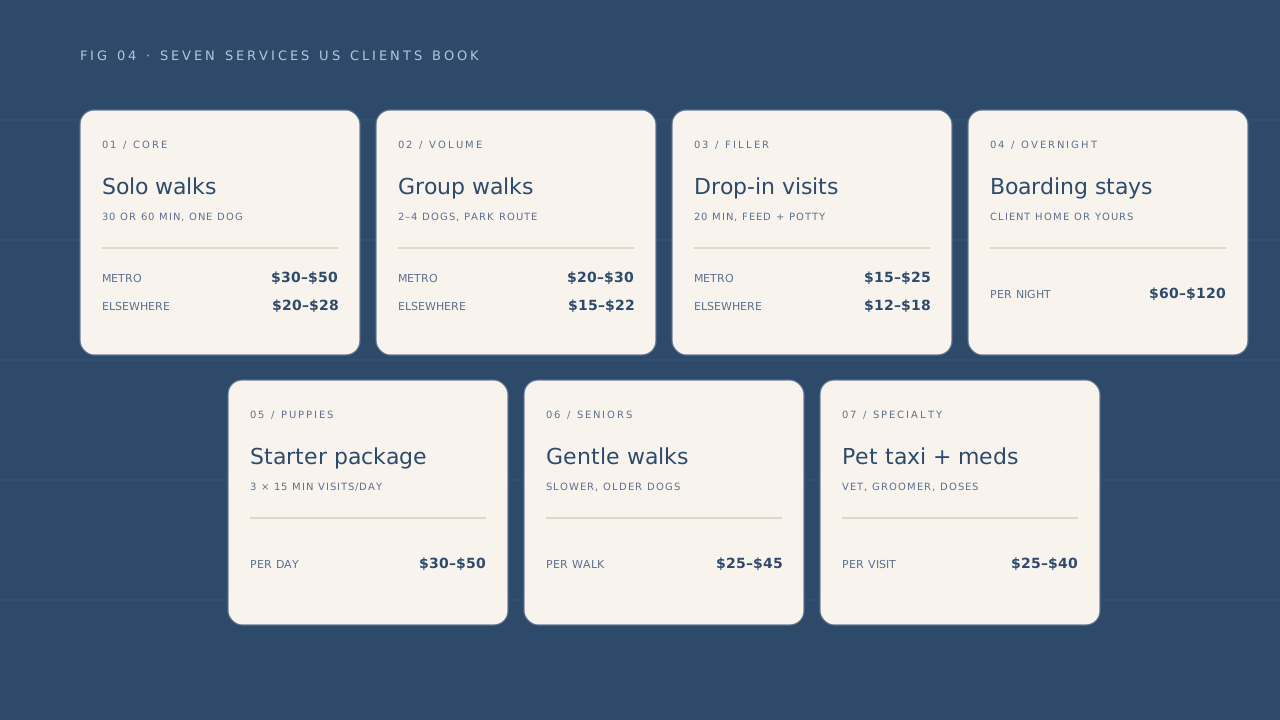
The temptation is to launch with one service, dog walking, and figure out the rest later. That is also the fastest way to leave money on the table. Most US clients book one of seven services, and offering all of them lets you stack revenue against a stable client base instead of chasing new acquisitions. The seven types of work US clients pay for in 2026, and what each one earns:
1. Solo walks, the precious core
30‑minute and 60‑minute on‑leash walks for one dog. The work most new operators picture when they think about the business. The premium tier. Anchors what the rest of your services charge against. Mind the trip math: a 30‑minute walk that needs a 15‑minute drive each way is a one‑hour job, not a 30‑minute one.
2. Group walks, the unit‑economics tier
Two to four dogs walked together, usually in a park or open route. Lower price per dog, higher revenue per hour. Some city permits cap pack sizes (Boston caps at six in public parks, Seattle requires a Commercial Animal Walker permit over four). Require pre‑screening for reactivity, recall, and whether the pets get along with each other.
3. Drop‑in visits, the schedule‑filler
A 20‑minute visit to feed, water, and let the dog out for a potty break. No walk. Used by clients whose dog has limited mobility, by puppies who can't hold it through a workday, or as a cheaper second‑of‑day option. Stacks neatly between morning and afternoon walks. Charges $15–$25 in most US towns.
4. Overnight stays, the boarding tier
The walker stays in the client's home with the dog overnight, or the dog stays at the walker's home. Legally more complicated (zoning, sometimes a permit), and brings in a different type of liability. Pays $60–$120 per night and is the single biggest revenue lever once you've passed twenty clients.
5. Puppy starter package
Three 15‑minute visits per day for puppies under six months. Bathroom breaks, basic socialization, food top‑ups, and the slack moments where you can teach a five-minute trick that delights the client when they get home. Charges $30–$50 per day total. Marketing this as a distinct package wins puppies‑for‑life, the kind of clients who stay for ten years.
6. Senior gentle walks
Slower‑paced walks for older dogs, lower mileage, more standing‑around‑and‑sniffing. Same per‑walk rate as a solo walk. Worth marketing separately; the senior‑dog client market is loyal and price‑tolerant. Senior dogs and reactive dogs share a calmer handling vocabulary, see our field guide to handling a scared dog on a walk for the four-step framework.
7. Pet taxi and medication administration
Vet appointments, groomer drop‑offs, evening medication doses. Specialty add‑ons priced at $25–$40 per visit. Not your first service, but useful once you have five regular clients who trust you.
Beyond the core seven, the bookable add-ons
Once the core seven are running, US clients book a long tail of smaller services that compound revenue without much marginal complexity. The ones worth offering, with rough rates:
- Dog running (jogging route, energetic dogs), same rate as a solo walk, plus $5.
- Dog hiking (off-leash trail, group of 2–4 hand-picked dogs), $40–$70 per 90 minutes.
- Dog park visits (drive to local off-leash park, monitor play), $25–$40 per hour.
- Training assistance (basic obedience reinforcement, not formal certifications), $30–$45 per session.
- Emergency visits (vet-bound, sick dog, client snowed in), flat $40–$60 plus mileage.
- Pet waste cleanup (yard service, weekly), $15–$30 per visit.
- Pet food pickup and delivery, $10–$20 over cost.
- Customised exercise programs for weight-loss dogs and reactive dogs, standalone tier, $40–$80.
- Plants watered, mail collected, home security checks, pet sitting add-ons, $5–$15 per visit each.
- Pet wedding attendant (yes, this is a real and growing service), $200–$500 per event.
Keep the marketing mind simple: lead with the core seven, mention the add-ons on the services page, and let clients ask. The best types of clients are the ones who book three services across a year, not one. Your job is to make the menu visible without overwhelming the homepage.
The two services to leave for later
Pet sitting (vacation home visits over several days, sometimes including overnight stays in the client's home) is genuinely a different business, more like Airbnb than dog walking. Folding pet sitting in too early dilutes focus. Wait until year two. Daycare (group play sessions at a facility) requires a building, a kennel license, and a different insurance class entirely. Year three at the earliest.
Every additional service adds a small amount of operational complexity for a meaningful amount of revenue. The qualifications and certifications worth getting (pet first aid, basic dog handling, sometimes a state‑specific commercial walker permit) cover all seven. The cost of adding service three is a fraction of the cost of adding service one. Animals, like the businesses caring for them, reward the operator who can hold variety in their schedule. The needs of a senior dog and a puppy are different, but covering both lets you sell to a family with two dogs, not one.
07 / GeographyWhere state matters most.
The single biggest variable in your first year isn't how many walks you book. It's where you live. The US has fifty independent regulatory environments for dog walking, ranging from literally no requirements to multi‑permit, multi‑fee, with a city‑issued license to operate in public parks.
A useful map of the extremes:
- Texas. No state license required for dog walkers. Most cities don't require business licenses for sole props. Lowest‑friction state to launch in.
- California. Most cities require a city business license ($30–$200/year). The ABC test (more on that below) makes hiring particularly fraught. High insurance rates. High earning potential.
- New York City. Register with DCWP (Department of Consumer and Worker Protection). Some boroughs cap pack sizes; others don't. Sales tax doesn't apply to dog walking services in NY but applies to boarding. Check carefully if you offer both.
- Hawaii, New Mexico, South Dakota, West Virginia. Service‑tax states. Register with the state department of revenue and collect sales tax on every walk.
- Boston, Seattle, Chicago. Specific commercial dog walking permits for use of public parks. Boston caps groups at six in parks. Seattle requires a Commercial Animal Walker permit for groups over four.
Spend an hour on your city's parks‑and‑recreation website before you launch. Search “commercial dog walking permit” and your city name. If a permit scheme exists, that's your starting point. If it doesn't, you're probably fine to operate, but check sales tax and zoning rules at the state level.
| Jurisdiction | Requirement | Typical cost | Friction |
|---|---|---|---|
| Texas | No state license, most cities don't require business license | $0 | Lowest |
| California | City business license + ABC test for hiring | $30–$200/yr | High |
| New York City | DCWP registration; borough pack-size rules vary | Varies | Medium |
| Hawaii, NM, SD, WV | Sales tax collected on every walk | Varies by state | Medium |
| Boston | Permit; pack cap of six in public parks | $50+ | Medium |
| Seattle | Commercial Animal Walker permit for groups > 4 | $110/yr | Medium |
| Chicago | Commercial dog walking license, park-specific rules | $65/yr | Medium |
Choosing your service radius (and protecting your gas budget)
Where you offer services matters as much as which state you launch in. In a big city like Los Angeles or New York, trying to service the whole city is a route to driving across town all day and walking nothing. Start with one or two adjacent ZIP codes and grow organically. In a small town or rural location, you may need to cover several towns to hit capacity; the math changes, but the principle holds: every additional mile is gas money and time that does not bill.
Calculating travel time and additional expenses before you accept a new client is the difference between a profitable route and a busy-looking one. The rough rule operators we work with use: a new client must sit inside a 10-minute drive of an existing booking, or be worth a separate dedicated trip at premium pricing. Hunt the underserved areas in your town instead of fighting for the saturated ones. If three competing walkers all cluster in the same neighborhood, the neighborhood next door is often the one with a lot of demand and no supply. Look for the gap, not the crowd.
08 / Days 31–60Five direct clients, off‑platform.
This is where most US operators give up and sign back into Rover. The five‑client launch, reflecting the patterns we see across the operators we work with, is a deliberate four‑week sequence that gets you the first five paying direct clients without renting demand from anyone.
The Rover exit, by personal note
If you're currently on a platform, the fastest path is the personal note. Pick your eight or ten favorite Rover clients, the ones who book repeatedly, who tip well, who treat you like a professional. Send each a personal email that says, in effect, “I'm moving my business off Rover starting next month. The walks will be the same. The price will be slightly lower than what you're paying Rover today. Here's my Venmo or Stripe invoice link.” Six out of ten will follow you. The other four are doing you a favor by staying on the platform.
The door‑knock playbook
If you don't have a Rover client base to convert, the door‑knock playbook works. Pick two adjacent ZIP codes, print 80 simple flyers ($20–$40 at FedEx Office), and walk the streets on a Saturday morning. The script is short: “Hi, I'm Maya, I just started Austin Wagtails dog walking. I'm offering a free 20‑minute meet‑and‑greet to dog owners on this street, no obligation. Got a flyer here.” The flyer carries your name, cell number, three services with prices, your insurance certificate number, and a borrowed neighbor's dog photograph. No logo. The 17.5% reply rate is a typical median for door‑to‑door flyers in residential US ZIP codes; expect 10–25% depending on neighborhood.
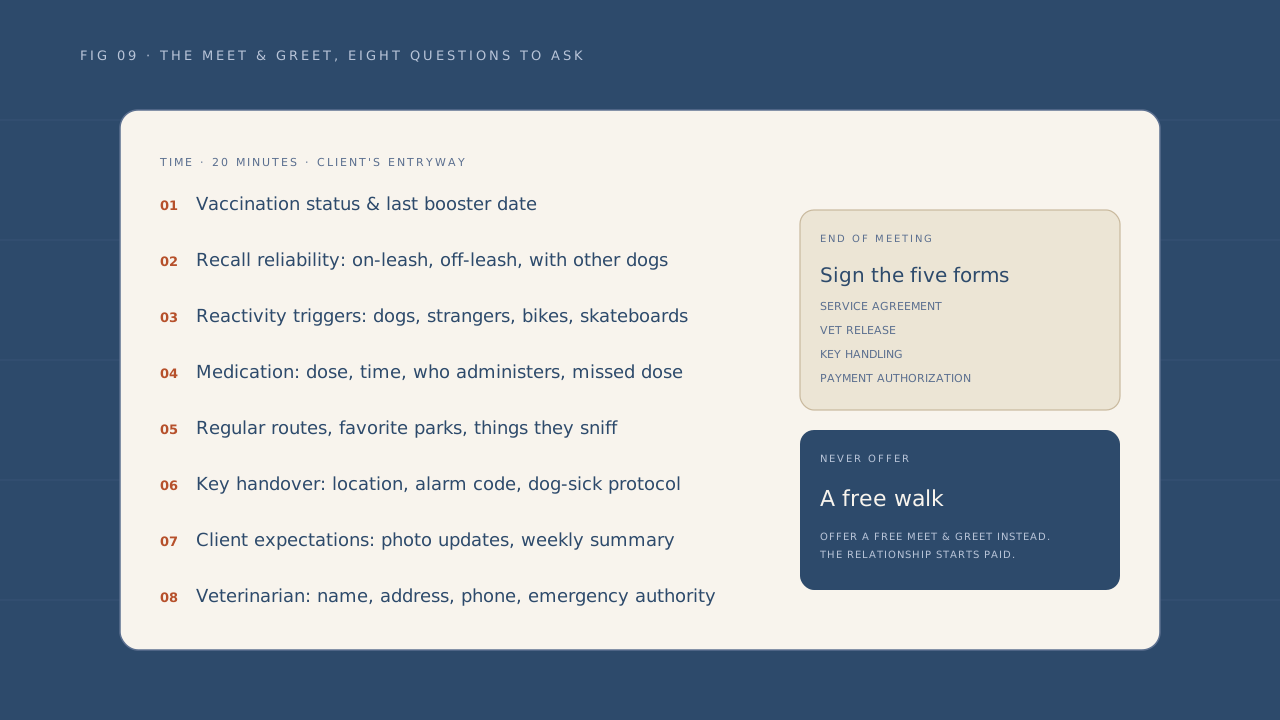
The meet‑and‑greet, and the eight questions to ask
Never offer a free walk. Offer a free meet‑and‑greet, a twenty‑minute conversation in the client's entryway where you take notes on the dog, hand over a printed contract, and book the first paid walk. A free walk teaches the client that your work is free. A free meet‑and‑greet teaches them that your work is professional and starts the relationship paid.
What to cover at every meet‑and‑greet, in order:
- Vaccination status and the date of the last booster.
- Recall reliability: on leash, off leash, and with another dog present.
- Reactivity triggers: other dogs, strangers, bikes, skateboards, vacuum cleaners.
- Medication: dose, time, who administers, what happens if missed.
- The dog's regular routes, favorite parks, and what they like to sniff.
- The walk handover: where the key lives, what the alarm code is, what the “dog is sick” protocol is.
- The client's expectations: photo updates, app notifications, written notes, weekly summary.
- Veterinarian name, address, phone, and the answer to “what authorizes treatment in an emergency.”
You answer these in twenty minutes, or you reschedule. You hand over the contract at the door, signed before the first walk.
Maya is fictional, but the math reflects the patterns we see across operators we work with. The story is consistent: clients who already trust you on a platform will follow you off it if asked plainly, and you'll earn more even after charging them less. The platforms' entire economic case rests on customers not knowing how much the platforms take.
09 / MarketingHow US clients actually find you.
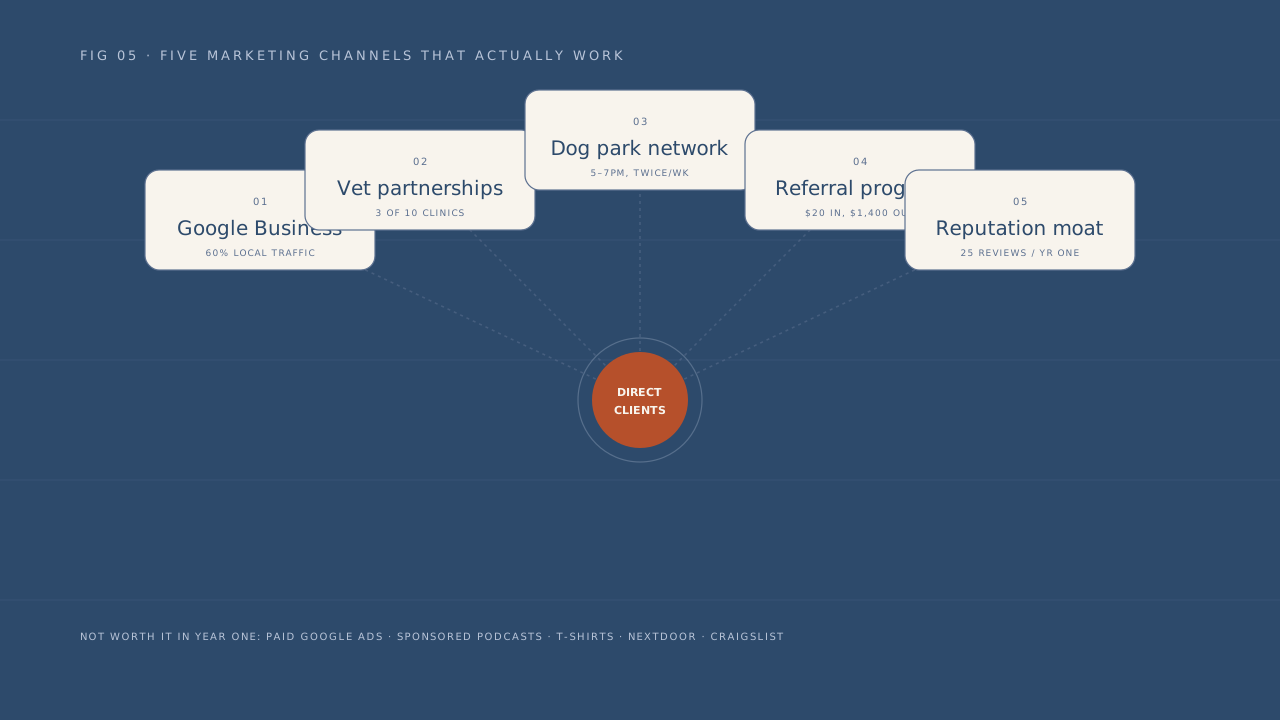
The door‑knock playbook in Section 08 is the cold‑start engine. Once you have five direct clients, the system that scales the next twenty is different. US dog walkers in 2026 acquire clients through five channels that work, two that look like they work but don't, and one universal multiplier called reputation. The information in this article's marketing section is the most useful content in the whole piece for any operator past month two.
The five channels that work
Google Business Profile, Yelp, vet office partnerships, dog park presence, neighbour referral. In that order.
Google Business Profile is free, and according to BrightLocal's 2026 local SEO survey, drives roughly 60% of “[city] dog walker” search traffic. Get verified the week you launch. Add eight photos. Reply to every review within 24 hours. Yelp is half as important but still earns a free listing, photos, and one weekly post. Combined, the two cover everyone in your town searching for a walker on a phone.
Vet office partnerships, the under‑used channel
The most under‑used marketing channel in the dog walking industry. Walk into three local veterinary clinics on a Wednesday afternoon (their quiet day). Bring printed business cards, a one‑page services sheet, and a small thank‑you (a box of dog treats or a coffee gift card for the front desk). Ask the receptionist whether they keep a referrals folder for dog walkers. Six out of ten will say yes. Three of those six will send you a real client within a month. PSI publishes free articles and resources on how to structure these partnerships; the templates are worth the membership fee on their own.
Dog park presence, networking with a leash
Networking with a leash in your hand. Walk a friend's dog at your local dog park during the popular 5pm to 7pm window twice a week. Make eye contact. Don't pitch. Wear a polo with a small logo. Two months of this consistently produces four to six client conversations. The dog park is also where you learn who already uses a walker (everyone you talk to has an opinion) and what the local rates are: market research disguised as small talk.
Social media, the honest take
Instagram is worth one account, posted to twice a week, mostly client dogs (with permission) on routes. The point is not to grow followers; it is to be findable by clients who Google your business name and want to confirm you're real. Facebook business pages are nearly dead for local services in 2026, but Facebook groups remain useful for neighbour‑of‑neighbour referrals. Join three local groups; respond, don't post. TikTok is a content rabbit hole; ignore it until year three. Social media is not your acquisition channel; it is your social‑proof channel, and the difference matters.
The referral program that actually works
Neighbour referral is the strongest signal you can buy, but a lot of operators don't build the system for it. Run a referral program with a clear structure: $20 off the referrer's next month, or a $20 donation to a local rescue in their family's name. Track it on a spreadsheet. The math: each referral costs you $20 and brings in approximately $1,400 in annual revenue. The ROI is absurd.
Reputation, the moat that compounds
Google reviews are the single highest‑leverage marketing asset you build. Target 25 reviews in your first year, then 50 by end of year two. The system that gets them: ask every client after the third week of service, in person, with the words “if you've been happy with us, a Google review really helps the business.” That sentence converts at about 30%. After 25 reviews at 4.8 stars or higher, your competition in town cannot catch up without spending money you no longer need to. Reviews are the assets that compound; flyers and ads are the spend that doesn't.
What doesn't work in year one
Paid Google Ads ($600+ per month for marginal returns). Sponsoring local podcasts (no audience overlap). Branded merch products like t‑shirts and water bottles (vanity items, not channels). Nextdoor app posts (high effort, low conversion). Craigslist for anything but free flyer reach. Save the budget for year two when you have the data to spend it well.
The biggest issues new operators have with marketing are doing all of these at once, badly, and tracking none of them. Pick three channels in year one. Track which one each new client found you through. Get each one producing two clients a month. Then add the fourth. The benefits of focus compound the same way reviews do.
The ten pages every dog walking website needs
Whichever channel sends a prospective client your way, all roads lead back to a website. A simple Squarespace or Wix site, built in a Friday evening, needs ten pieces of content laid out clearly. They do not each have to be a separate page; many can be sections of a longer homepage. But the information has to exist somewhere a client can find it in seven seconds:
- Homepage, what you do and where you do it, in one sentence above the fold.
- About, your name, your story, your photo, the insurance certificate number.
- Services, the seven core services and the add-ons, with prices.
- Service area, the ZIP codes and neighborhoods you cover.
- FAQ, the eight questions clients ask before booking (cancellation, late payment, keys, sick dog).
- Reviews, embedded Google reviews or testimonials with full names.
- Blog, two posts a quarter is enough; it is the local SEO lift.
- Policies, cancellation, holiday, late-booking, in plain English.
- Jobs, even if you have not hired yet; it signals you intend to grow.
- Contact, a form and a real phone number, not a generic info@ email.
That structure does the marketing work between the meet‑and‑greet and the booking. It also gives Google something to crawl for the “[your city] dog walker” query that converts at four to seven times the rate of any other channel.
10 / The formsThe five every client signs.
The default mode for new operators is to text the client “yes” to whatever's needed. It works until someone calls you at 2am because their dog has eaten a sock and they want to know whether you'll pay the vet bill. Five documents, signed at the meet‑and‑greet, head off the 2am call. PSI and NAPPS include templates with membership; Tailor Brands has a free service agreement template. Get a one‑hour attorney review before you use any of them the first time.
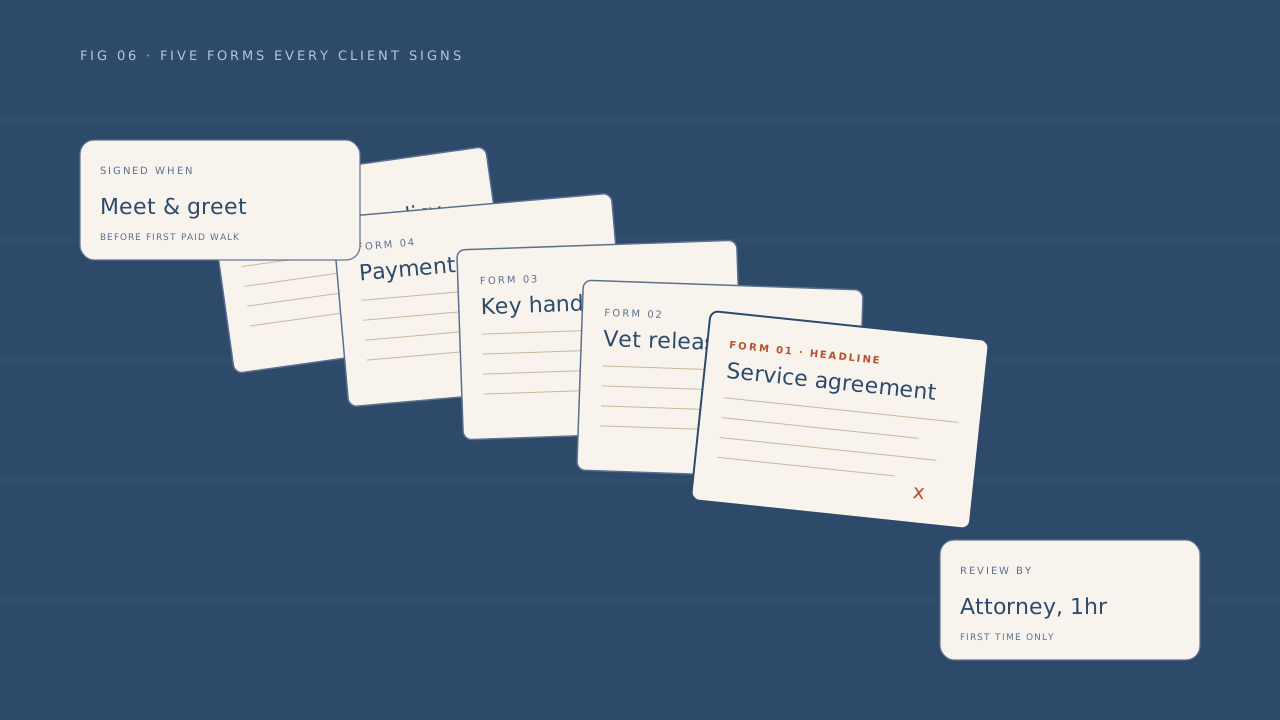
1. Service agreement
The headline document. What you'll do (walk length, frequency, included tasks like feeding and water top‑ups), what's not included (medication, training), how cancellations work, when payment is due, and the limitation of liability. Two pages. Two signatures.
2. Vet release form
A short standalone document giving you authority to seek veterinary treatment in an emergency, capped at a dollar amount (typically $500–$1,000) before you must reach the owner. Without this, the vet won't treat. Without this, you're personally exposed.
3. Key handling form
An acknowledgement of which keys you hold, how many copies, where they're stored, what happens if one is lost, and whether you're authorized to enter the property when the dog isn't present. The single most important form for a bonded business.
4. Payment authorization form
The client's authorization for your payment processor (Stripe, Square, Venmo for Business) to charge them on a recurring schedule. Removes the awkward weekly invoice conversation. Removes the bad‑debt risk.
5. Cancellation policy
Read by every client. Written into the service agreement. Most operators settle on 24 hours' notice, full charge for less, half charge for a same‑day cancel by the operator if the dog is sick. Whatever you choose, write it down before you need to enforce it.
11 / PricingThe math the platforms hide.
The 2026 US average for a 30‑minute walk is $21.45 according to industry data, with major metros (Manhattan, San Francisco, Boston, DC) running 1.5–2× that. Both numbers are useful as anchors, useless as price floors. The right price isn't the average. The right price is the one at which you can deliver good work without resentment, after platform fees if any. For the full mechanic of pricing tiers, the cost floor calculation, and the take-home math after self-employment tax, see the companion piece on US dog walker pricing and the Five-Number Rate.
Local market research, what your block already pays
Before you set a price, spend an afternoon researching the local competition in your town. Open Rover and Wag, filter to your ZIP code, and list every active walker's solo and group rates. Open Google Maps and search “dog walker” within five miles; note the businesses with five‑star ratings and read their pricing pages. Talk to anyone you know with a dog walker and ask what they pay. Most US neighbourhoods have a clear two‑tier market: the Rover walkers charging $20–$30, and the established independents charging $30–$50. Your floor sits above the first tier and your ceiling sits at the top of the second. Information about what your competition charges is a five‑times better anchor than any national average. Spend two hours on the market research before you commit to a number.
The math nobody on the platform side wants you to do
A $30 walk on Rover, after the 20% standard commission, after Stripe processing on what's left, nets you about $23. The same client booked direct at $26 nets you $25.40 after Stripe (you absorb the 2.9% + $0.30 processing fee yourself). The customer paid $4 less. You took home $2.40 more per walk. Multiplied across 22 walks a week, that's an extra $52 per week, or $2,500 a year, on the same workload. The only loser was Rover.
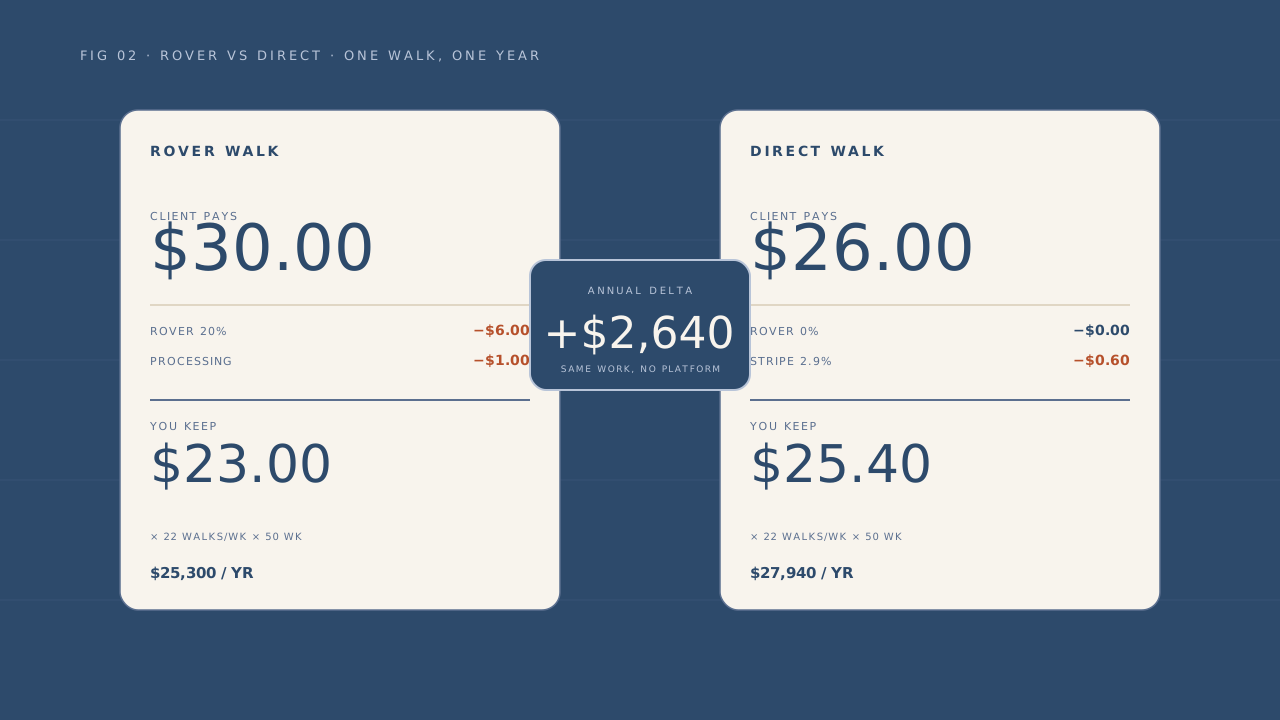
If you're currently on a platform, your direct‑client price floor is whatever the platform's sticker price minus 10% comes out to. You'll still earn more. The customer will still feel they got a deal.
Anchor the price to the platform's number, not the local average.
The three‑tier structure
The structure that holds at scale: solo walk ($30–$50 in metros, $20–$28 elsewhere), group walk ($20–$30 / $15–$22), drop‑in visit (no walk, just feed and potty break, $15–$25 / $12–$18). Solo gets you the precious clients. Group gets you the unit economics. Drop‑ins fill the schedule gaps and stack neatly between morning and afternoon walks. Three tiers cover roughly 95% of US demand.
The launch‑undercut trap
A common mistake new operators make: undercutting on launch to fill the schedule fast. It works for three weeks and traps you for eighteen months, because raising prices on existing clients is roughly five times harder than starting them at the right price. Set your floor where it should be from day one.
Display prices on the website and disclose every fee
Prospective clients judge your professionalism in the seven seconds they spend on your services page. Visible pricing builds trust before the first phone call; hidden pricing reads as something to negotiate, which is a smaller market. Post your three core tier prices, the metro vs neighbourhood variations if relevant, and the typical packages (weekly four-walk, two-walk, drop-in). Show prices in dollars, not "starting from."
Disclose the five fees most US walkers charge but few document well, in writing, on the same page:
- Late-booking fee (booked under 24 hours out), $5–$10.
- After-hours surcharge (walks before 7am or after 7pm), $5–$15.
- Holiday surcharge (federal holidays plus the day before and after), $5–$15 per visit.
- Additional pet fee (a second dog in the same household, sharing the walk), $5–$10.
- Same-day cancellation fee, half-rate as per the cancellation policy.
Apparent to clients from the get-go, billed without conversation. The transparency does the conversion work the price tag itself cannot.
12 / Days 61–90The system, and the IRS landmine.
Months three and four are when most independent operators hit a wall. The schedule fills up. Memory becomes the only system. Then they decide it's time to hire staff.
Three records that have to exist by day ninety
Client cards, one per dog, with vet, microchip, key code, behavioral notes, recall reliability, emergency contact. Walk log, one row per walk, every walk: dog, time, route, walker. Key register, whose key, which keyring, where it lives, what the procedure is when one is lost. NAPPS, Pet Sitters Associates, and PSI all have free templates. Use one.
Software, and the client number where it earns its keep
Spreadsheets work for the first twenty clients. Past that, dedicated software starts to pay back. Time To Pet ($25–$50/month) and Scout for Pet Sitters ($25/month) are the two main US‑market options, with Pet Sitter Plus and Precise Pet Care as the alternatives. We're biased (we make PackMonty), but the principle is independent of the tool you choose: pick one before client number twenty, because migrating from a spreadsheet at fifty is genuinely awful. The features that matter at scale are not invoicing or scheduling individually but their integration: schedule changes that flow into the invoice that flows into the walker's payroll.
| Software | Monthly cost | Best for | Notable feature |
|---|---|---|---|
| Time To Pet | $25–$50 | Established teams (3+ walkers) | Full payroll integration; mature feature set |
| Scout for Pet Sitters | $25 | Solo to five walkers | Modern UI, fastest setup |
| Pet Sitter Plus | $30–$60 | Teams of five or more | Most customisation, most complex |
| Precise Pet Care | $20 | Bootstrap solo operators | 30-day free trial; lean feature set |
| PackMonty (in beta) | TBD | Operators who care about design | Hand-built UI, modern stack |
The IRS landmine, W‑2 not 1099
This is the section that costs people money. You almost certainly cannot legally pay your dog walkers as 1099 independent contractors. The IRS, the Department of Labor, and most state revenue agencies have explicitly identified dog walking as a profession that fails the federal common‑law test for independent contractor status. California's ABC test (Dynamex / AB5) is even stricter and applies to most service work. New York, Illinois, Washington, and a growing list of states have similar tests in some form.
The reason is structural. If you assign the routes, set the schedule, provide the insurance, provide the software, set the rates the client pays, and take the booking yourself, the worker is an employee under federal law. They are a W‑2 employee, full stop. They cannot legally be 1099 even if they sign a contract that says they are, even if they prefer 1099 status, even if they have other clients.
If you're audited and reclassified, the back taxes, penalties, and interest typically come to 30–50% of total wages paid, and your insurance carrier may decline to cover incidents that occurred during the misclassification period. Small dog walking operators have been wound down by exactly this exposure. The IRS publishes the test; read it before you offer anyone a contract. Run W‑2 payroll through Gusto or OnPay ($40–$60/month) from the first hire.

The IRS test is structural, not negotiable. Set the schedule, set the routes, set the rates, and federal law says employee. ‘They prefer 1099’ is not a defense an auditor accepts.– Karen, who runs an eight‑walker operation in Brooklyn
13 / Anti‑patternsSix US‑specific traps.
1. Living on a platform “just for experience” forever
The first three months on Rover or Wag is a useful audition. Beyond that, it's a slow self‑capping of your career. Set a deadline when you sign up, sixty days, ninety days, and exit on schedule whether or not you're ready. You're never going to feel ready.
2. Hiring as 1099
Discussed above. The IRS rules and the ABC test in many states make this unworkable for dog walking. Pay your walkers W‑2, withhold properly, file 941s, run a real payroll service ($40–$60/month for Gusto or OnPay). The cost of compliance is roughly $700 a year per walker. The cost of getting it wrong is potentially the business.
3. Not bonding when you hold keys
US clients increasingly expect bonded coverage in addition to insurance, specifically a fidelity bond that pays out if you or an employee is accused of theft. Bonds run $100–$300 a year and remove the largest reservation potential clients have about handing over a key.
4. Trying to scale across multiple cities at once
The state‑by‑state regulatory variation makes geographic expansion much harder in the US than in most countries. Pick one metro. Get to capacity (~22–28 walks per week per walker) before you hire. Stay there for six months. Only then look at the next city.
5. Chasing a niche in year one
Niche‑led marketing (only seniors' dogs, only reactive dogs, only large breeds, only luxury apartments) is real, but it's a year‑three move, not a year‑one move. In your first year you don't yet know what you're good at or what your area pays a premium for. Start broad. Get to twenty clients. Then specialize on the patterns you noticed, not the niche you imagined.
6. Skipping a website because “Google Business Profile is enough”
Google Business Profile is necessary but not sufficient. A simple Squarespace or Wix site (build it in an evening, $15/month) does three things GBP can't: it hosts the insurance certificate PDF, it shows the service agreement, and it ranks for “[your city] dog walker” queries GBP doesn't reach. Make it on Friday night. Move on.
14 / ConclusionThree steps for tomorrow morning.
Pick three steps for tomorrow. Not the most exciting ones, the most consequential. If you're currently on Rover or Wag, count what you paid them last year. That number is the answer to whether to go independent. If you haven't started yet, apply for an EIN at irs.gov; it takes ten minutes, costs nothing, and is the legal‑floor checkpoint that everything else builds on.
Tomorrow afternoon, walk a dog you already know, for free, for an hour. Take notes on what you forgot to ask. The next morning, do it again with a different dog. By the end of week one, you will have done more than most people who set out to start a US dog walking business this year, and you'll know whether the work itself suits you.
Three tips that operators we work with wish someone had given them on day one. Pay your insurance and bonding bills the day they arrive, not the day they're due. Run a background check on yourself first, then on every staff member. Never let safety paperwork lag, the meet‑and‑greet questions, the vet release, the key handling form. The boring administrative discipline is the actual moat; the dogs and the routes are the work everyone sees.
The 90‑Day Frame is permission to stop trying to do everything at once. Days 1–30, 31–60, 61–90. Three windows. One job each. Decline the platforms, find five direct clients, sign the five forms, build a system before you need one, and pay your walkers W‑2. Do that, and at the end of ninety days you will own a business, not rent one.
– Devon Russo, somewhere between a meet‑and‑greet and a payroll deadline, Austin