Quote requests for overnights arrive the same way every time: a two-line text on a Tuesday, “going away Labor Day weekend, what do you charge for overnight stays?” And if you're like most sitters, the number you text back came from a pet sitter rates calculator you found on Google two years ago. It said $60 a night, so you said $60 a night. Then you spent fourteen hours in a stranger's house with two dogs, a security system you didn't know the code to, and a 5:45am wake-up. That's $4.29 an hour. The calculator did that to you.
This piece does two things. It shows you what overnight pet sitter rates actually look like across the US in 2026, with real numbers and where they come from. Then it replaces the generic calculator with one you run yourself: the Four-Number Overnight, a rate built from your own overhead, your own market, and the two or three holiday weeks that decide whether your year was profitable. It takes about an hour to run the first time, and about ten minutes every quarter after that.
01 / The benchmarkWhat overnight pet sitter rates look like in 2026.
Start with the honest national picture, because you need a reference before you can position against it. Across the sources that publish real data, the average US overnight pet sitting rate in 2026 sits at about $80 per night. Pet Sitters International's 2026 industry survey and TrustedHousesitters' market research both land on that figure independently. Around the average, the spread is wide: consumer marketplaces quote $45 to $75 a night, while professional, insured, background-checked sitters in metro markets charge $75 to $150, and the most expensive cities run past $160. Miami tops most city tables. Rural markets bottom out near $25 to $30.
Three more numbers frame the market. A boarding kennel averages $40 a night, which is the cross-shopping price your clients quietly compare you against. Hourly starting rates for pet sitters run from about $13 an hour in San Antonio to about $20 in Los Angeles, according to Care.com's June 2026 data. And holiday weeks are their own market entirely: professional sitters add 25 to 50 percent over Thanksgiving, Christmas, and July 4th, with some doubling their rate between Christmas Eve and New Year's Day.
Demand is moving in your favor. The US pet industry is projected to reach $165 billion in 2026, and 68 percent of professional sitters surveyed by PSI expect their revenue to grow this year. The overnight segment specifically benefits from a structural shift: owners increasingly refuse kennels, and vets keep telling them pets do better at home. You are not selling into a soft market. Which makes it stranger that so many sitters price like they are.
02 / The problemWhy every rates calculator hands you someone else's number.
Search for an overnight pet sitter rates calculator and you'll find the same three tools wearing different logos. Time To Pet's calculator averages the rates of its own software customers by ZIP code. Calday's pulls Bureau of Labor Statistics wage data for “Animal Caretakers,” a category that lumps pet sitters in with kennel attendants and groomers, which drags the number down. The rest quote a national range and call it a day. All of them share the same two defects.
First, they average the wrong population. The blended number includes the college student watching a neighbor's cat for $40 and the insured professional running her fifth year of overnights. Those are not the same product, and their prices shouldn't be in the same average. When you anchor to the blend, you price yourself against people who have no insurance, no liability coverage, no pet first aid certification, and no business to protect.
Second, and more fundamentally: no calculator knows what the night costs you. An overnight is roughly 12 hours occupied, of which maybe two to three are active work, feeding, walking, meds, cleanup. The rest is presence. You are displaced from your own home, on call at 3am, and legally the responsible adult in a house that isn't yours. We covered the general shape of this in our dog sitting rates guide, where the Occupied-Hour Rate Card showed overnights quietly losing money for operators who priced them like long drop-ins. The overnight-specific version goes further, because overnights carry costs no other service has.
A calculator that never asks what your costs are cannot tell you what your rate should be. It can only tell you what other people charge. Those are different questions, and only one of them pays your insurance.
03 / The frameworkThe Four-Number Overnight: a calculator you run on paper.
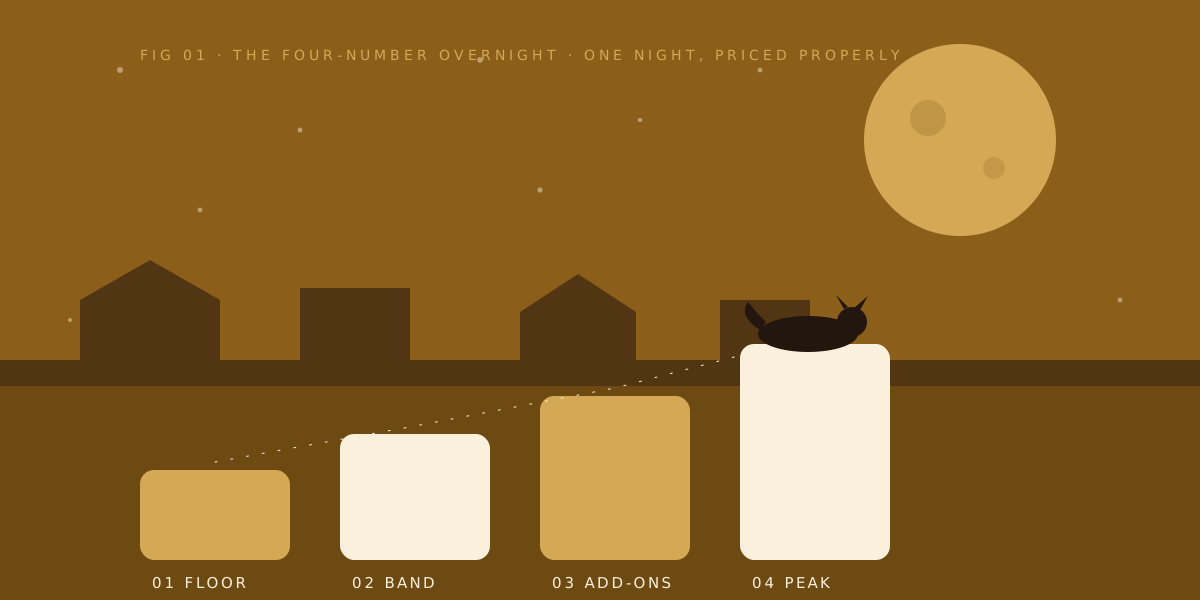
The Four-Number Overnight replaces the web widget with four numbers you can produce in an hour: a floor, a band, a set of add-ons, and a multiplier. The first protects you from underpricing. The second positions you in your actual market. The third stops the silent giveaways. The fourth captures the weeks that matter most. Here's the whole thing in one block; the rest of this section walks through each line.
Number one: the Night Floor.
Add up your annual overhead: pet sitting insurance runs $330 to $720 a year for most solo operators in 2026, then software, mileage, background check renewals, pet first aid recertification, and the accountant. Divide by the number of nights you realistically work in a year, not the number you wish you worked. Then add your take-home target for a night away from your own bed, grossed up for self-employment tax by dividing by 0.85, because the 15.3 percent comes out whether you planned for it or not. The result is your Night Floor. No booking goes below it. Not for a sweet regular, not for a slow February, not for a friend of your mother's.
Number two: the Market Band.
Now find the band that actually applies to you: what insured, independent professionals charge in your area. Pull the price sheets of five local competitors who carry insurance and operate as real businesses. Check the top decile of Rover listings in your ZIP, and remember owners pay an 11 percent service fee on top of the listed rate, so the market tolerates more than the listing shows. Ignore the bottom of the marketplace entirely; that's the casual blend the calculators averaged you into. If you're insured, certified in pet first aid, and experienced, you belong in the upper half of the band. The floor tells you your minimum. The band tells you what the market will actually bear, and in most US metros in 2026 those are further apart than sitters expect.
Number three: the Add-Ons.
Overnight margin rarely dies in the headline rate. It dies in the extras nobody charged for. Price these separately and put them on the booking form: a second dog adds $10 to $15 a night, medication adds $5 to $15 depending on whether it's a pill in cheese or an injection on a schedule, puppies and seniors add $10 for the interrupted sleep, and house extras beyond the basics, plants, packages, trash day, are fine to include until they take real time.
The biggest add-on is the one most sitters give away whole: the daytime. A standard overnight is a defined window, 7pm to 7am or whatever you set, and it needs to be in writing. Clients hear “overnight” and picture continuous coverage from drop-off to return flight. If the dog needs a midday visit while they're away, that's a drop-in at your full drop-in rate, booked like any other. Sitters who leave the window undefined end up providing 24-hour care, an $80 to $150+ per day product, at a 12-hour price, and then wonder why a full calendar still doesn't pay.
Number four: the Peak Multiplier.
Thanksgiving week, Christmas Eve through New Year's Day, spring break, and the July 4th week are when every client wants the same nights you'd rather spend at home. The professional norm in 2026 is a 25 to 50 percent uplift on those named weeks, and the operators who do it well share one habit: they publish the peak calendar in January, before anyone books, so the multiplier reads as policy instead of opportunism. Pair it with a 50 percent non-refundable deposit on holiday bookings. Sitters fill their Thanksgiving calendars by early November; a deposit makes sure the calendar that fills is one that pays.
04 / In practiceMarisol prices a seven-night Thanksgiving booking.
Marisol runs a three-sitter operation in Raleigh, North Carolina: walks on weekdays, overnights year-round. Her overhead comes to about $1,440 a year, insurance at $540, software, mileage, and a first aid recert, and she works about 160 overnight-equivalent nights across the team, so overhead adds $9 a night. Her take-home target is $75 a night, which grosses up to $88. Night Floor: $97. The insured-professional band in Raleigh runs roughly $85 to $130. Her floor lands inside it, so she prices at $110, upper-middle, which her reviews and six years of history support.
In July, a regular books Thanksgiving: seven nights, two dogs, one midday visit each day while the family is in Denver. Marisol's peak calendar, published in January, lists Thanksgiving week at ×1.3. The quote builds itself: seven nights at $110 is $770, times 1.3 is $1,001. The second dog adds $84 at $12 a night. Seven midday drop-ins at her standard $22 add $154. Total: $1,239, half due as a deposit at booking.
Run the same booking through the generic calculator's $60 average and you get $420, flat, no deposit, daytime included by vague implication. That gap, $819 on a single booking, is not a rounding error. It's the difference between an operator who priced the night and one who accepted someone else's average for it.
Nobody pays me to sleep. They pay for who's standing in the kitchen when the dog starts pacing at 3am.— Marisol V., Raleigh, six years of overnights
05 / Anti-patternsThree ways operators wreck their overnight margin.
- Selling 24-hour expectations at a 12-hour price. If your service agreement doesn't state the overnight window in hours, the client's imagination will, and their version is always longer. Write the window down, put it in the confirmation email, and price daytime coverage as its own line.
- Billing overnights by the hour. Hourly framing invites the sleep negotiation: “but you were asleep for eight of those hours.” A flat nightly rate prices the obligation, not the minutes. The one time hourly belongs in an overnight quote is for daytime extension beyond the window.
- The holiday guilt discount. Waiving the peak multiplier for regulars feels generous in October and idiotic on December 26th, when you've spent Christmas in someone else's house at your February rate. Publish the calendar early and apply it to everyone. Regulars get priority booking, not exemption. That's the loyalty benefit, and it costs you nothing.
06 / TakeawaysTake this with you.
Do one thing this week: run your Night Floor. Overhead divided by real nights, plus take-home grossed up for the 15.3 percent. Most sitters who run it for the first time discover their current overnight rate sits below their own floor, which means every night away from home has been quietly subsidized by their day work. Once the floor is on paper, the band, the add-ons, and the peak calendar each take ten minutes, and the next “what do you charge for overnights?” text gets an answer built on your numbers. If you want the same treatment for your whole price list, the Five-Number Rate does for walks what this does for nights.
The calculator you found on Google will keep saying $60. Let it. It's pricing somebody else's business.
– DR, writing this from someone else's couch, Brooklyn